Borrowed Bricks, Living Stones: A Walker’s Guide to Britain’s Recycled Church Walls
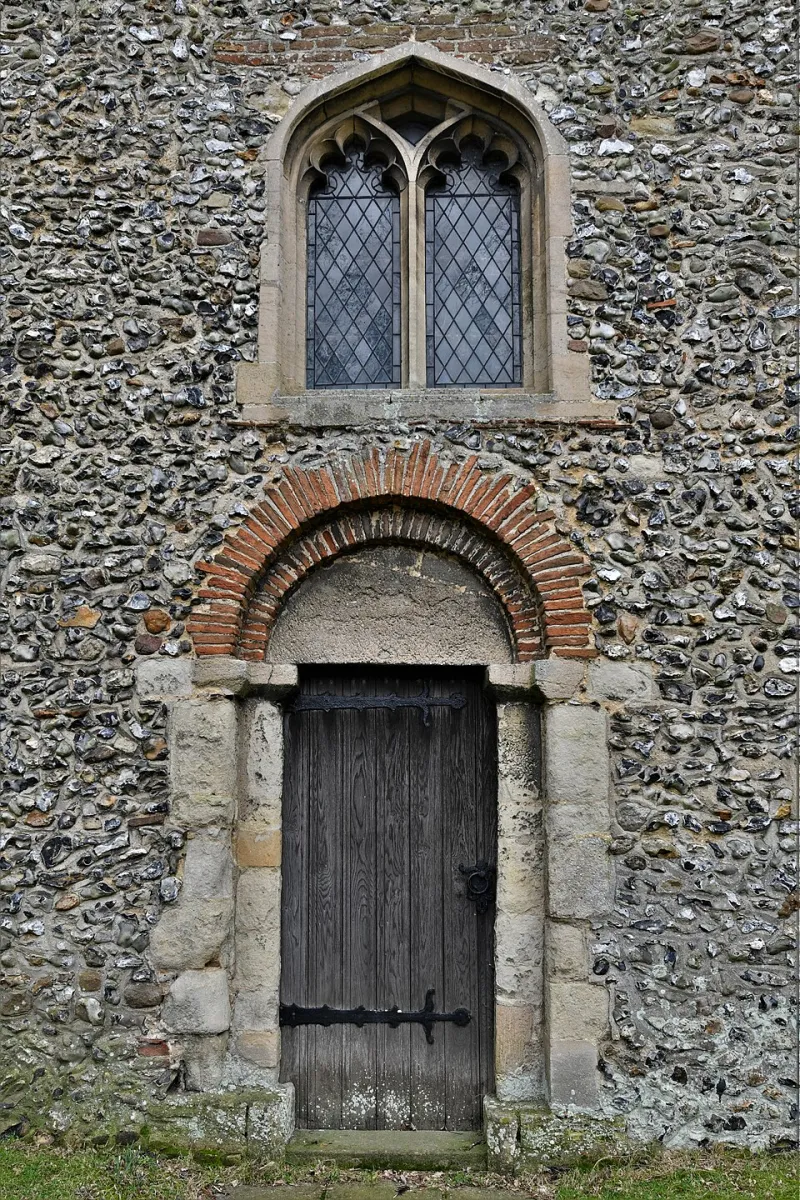
Photo: Michael Garlick , CC BY-SA 2.0, via Wikimedia Commons
Britain’s church walls are not clean slates. They are palimpsests. A Saxon nave may sit on a Roman floor. A Norman doorway may be framed by tiles fired for a fort that was already old when the first missionaries arrived. A Victorian restoration may have tidied the edges, but the older material often remains visible if you know where to look. In 2026, as many congregations face the hard economics of repair, these walls offer a quiet theology of reuse. They are mosaics that never wasted their past.
Why Reused Stone Matters
1 Peter 2:4–5 speaks of Christ as a living stone, rejected by humans but chosen by God, and of believers as living stones being built into a spiritual house. The image is not about polished newness. It is about being fitted together. A reused Roman tile in a church wall is not a perfect illustration of that passage, but it is a suggestive one. The stone has already had a life. It has been walked on, weathered, broken and set aside. Then it is taken up again and given a new place in a building of worship.
That is close to the logic of baptism. Baptism does not pretend that a person arrives without a past. It names the past, buries it with Christ and raises the person into a new identity. The old material is not denied. It is reordered. The church is not a community of people who have never been broken. It is a community of people who have been reclaimed, set next to others, and made to bear weight together.
What follows is a walker’s guide, not an exhaustive gazetteer. It offers six places where reused masonry is part of the visible fabric, with notes on what to look for and a short reflection for the visit. Check local opening times before travelling, respect cordons and closed areas, and never disturb loose mortar or stone.
1. St Albans Cathedral, Hertfordshire
St Albans is a good place to begin because the Roman presence is not hidden. The cathedral stands near the site of Verulamium, and Roman brick and tile from the Roman town are visible in the later fabric. The building has been added to, altered and restored across centuries, and the old Roman material sits within that long story.
Look for: thin, flat red Roman bricks, often set in courses among flint or rubble. They can be easy to mistake for later brickwork, so look at the colour and thickness. The Roman material tends to be tile-like rather than the fatter brick of later centuries.
Pause: Read 1 Peter 2:4–5 slowly. Consider that the stone you are looking at was made for a town that no longer exists, yet it still holds a wall that still holds a congregation.
2. St Martin’s Church, Canterbury, Kent
St Martin’s is often described as the oldest church in the English-speaking world still in use. Its walls contain reused Roman material, a reminder that the first Christian communities in Britain did not build from nothing. They built within the ruins and remains of what had gone before.
Look for: Roman brick and tile incorporated into the wall fabric, especially where later work meets older sections. The church is modest in scale, so the evidence is intimate rather than monumental.
Pause: Baptismal identity is not about starting with a blank sheet. It is about being joined to a body that has a long memory. Give thanks for the unknown workers who carried and set these stones.
3. All Saints’ Church, Brixworth, Northamptonshire
Brixworth is one of the great survivals of early English church building. Its seventh-century fabric incorporates Roman tiles, and the building’s complex history of alteration makes it a kind of architectural mosaic. The reused material is not decoration; it is structural.
Look for: Roman tiles in the arches and wall courses. Notice how different materials are made to work together. The building does not hide its borrowings.
Pause: Read Romans 12:4–8. A congregation is not made of identical parts. It is made of different members, with different histories, set together for a common purpose.
4. St Peter-on-the-Wall, Bradwell-on-Sea, Essex
St Peter-on-the-Wall was built into the Roman fort of Othona, and its name tells the story. The chapel is austere, windswept and deeply affecting. The Roman past is not a museum exhibit here; it is the ground under the feet.
Look for: reused Roman stone and tile in the walls, and the way the building sits within the outline of the fort. The setting matters as much as the fabric.
Pause: The church is a mosaic that never wastes its past. Ask what parts of your own history God might be reusing for a purpose you have not yet seen.
5. Escomb Church, County Durham
Escomb is a small Saxon church with large, squared stones that are often associated with reused Roman material from the surrounding area. Local tradition and architectural study both point to a community that gathered what was available and built for worship.
Look for: large blocks in the walls, especially where the stone is too regular or too substantial for the surrounding rubble. Notice the way the building’s small scale makes every stone legible.
Pause: Baptism joins us to a building programme that is older than we are and will outlast us. The living stones are not only the famous ones. They are the ordinary ones set in place by ordinary hands.
6. Reculver, Kent
The twin towers at Reculver are a landmark on the north Kent coast, and the site’s Roman fort, Regulbium, lies beneath and around the church ruins. Reused Roman material is part of the visible story of the place.
Look for: Roman tile and stone in the surviving masonry. The sea air and weathering make the different materials stand out, so take your time.
Pause: Repair is not the same as erasure. A church that reuses its past is not pretending nothing has changed. It is testifying that nothing faithful is wasted.
A Baptismal Reading of the Wall
It is easy to treat old churches as monuments. A field guide can encourage that habit: look at the date, find the feature, tick the box. But the New Testament’s language of living stones pushes in another direction. A wall is not alive because its stones are old. It is alive because the people who gather beside it are being built into Christ.
Baptismal identity is therefore both personal and corporate. I am buried with Christ and raised with him. I am also set next to other Christians, some of whom I did not choose, some of whom carry histories as broken and as useful as a Roman tile. The church’s repair is not only the repair of roofs and gutters. It is the continual repair of a community that learns to make room for reused material.
Practical Notes for the Walk
Go with a small notebook and a hand lens if you have one. North walls often preserve older fabric because they receive less sun and less attention. Look at the junctions between different phases of building: the point where a later wall meets an older one is often where reused material becomes visible. Photograph details rather than whole buildings; the detail is where the theology often lives.
Above all, do not treat the church as a puzzle to be solved. Treat it as a place of prayer that has been made by prayer. The Roman brick, the Saxon stone and the Victorian patch are all tiles in a mosaic that has been assembled over centuries. None of them is wasted. None of them is the whole picture. Together, under the hand of God, they become a house for living stones.