Stones Out of Square: Matthew’s Women and the Advent Mosaic of Grace
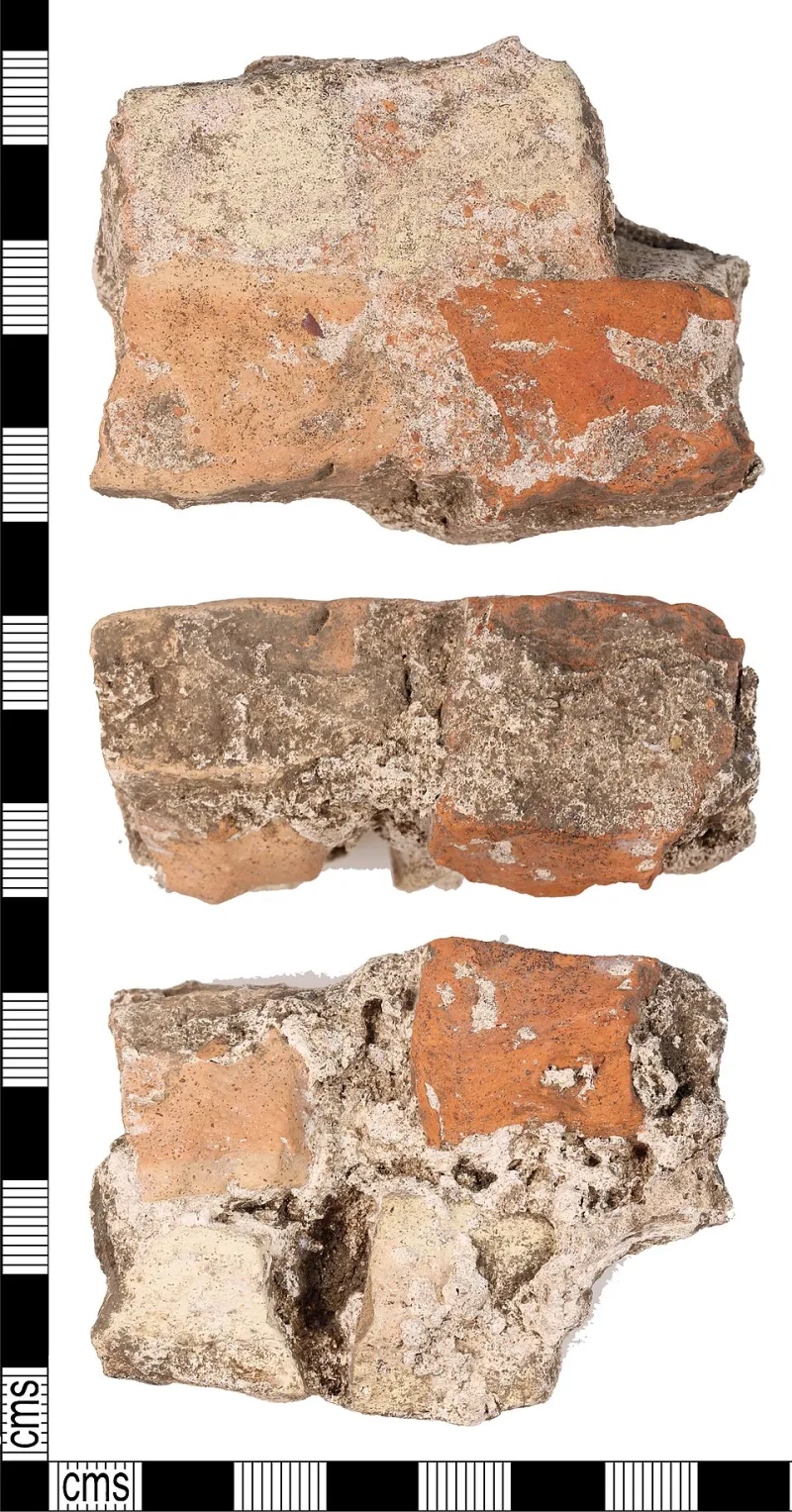
Photo: Kent County Council, Walter (Jo) Ahmet, 2017-11-29 17:36:15, CC BY 2.0, via Wikimedia Commons
At first reading, the opening verses of Matthew’s Gospel can feel like a wall of names: a genealogy to be endured before the familiar narrative of Bethlehem begins. Yet Matthew 1:1–17 is not a decorative preface. It is a deliberately constructed pavement of memory, and within it five women are set like stones that do not quite match the rest. Tamar, Rahab, Ruth, the wife of Uriah, and Mary are not incidental. Their placement invites the reader to see that the ancestry of Jesus is not a sanitised diagram but a mosaic of grace.
A genealogy that refuses to be a diagram
Matthew arranges the generations in patterned groups, but the pattern is interrupted by stories that resist neat classification. The women are not listed as abstract names. Each carries a history: risk, foreignness, widowhood, survival, scandal, courage, obedience. Matthew does not pause to explain or excuse every detail. Nor does he present the line as a trophy cabinet of moral achievement. He simply places these pieces within the story of God’s purpose, trusting that the whole will reveal what individual fragments could not.
This matters for congregations in the United Kingdom as Advent 2026 approaches. Many people arrive at church with family histories that feel too tangled for holy use: estrangement, migration, divorce, bereavement, financial strain, or the quiet shame of stories never spoken aloud. Matthew’s genealogy does not ask such worshippers to produce a polished pedigree. It shows that Scripture’s own account of Christ’s ancestry includes material that is uneven, complicated and sometimes painful.
Tamar: the piece that will not fit
Tamar’s story in Genesis 38 is among the most uncomfortable in Scripture. Her circumstances involve widowhood, levirate custom, deception and risk. Matthew does not erase her from the line; he names her at the outset. Her presence suggests that God’s purposes are not confined to the respectable or the straightforward. It also warns against a church culture that quietly sorts people into those whose stories are suitable for testimony and those whose stories are kept in the porch.
A mosaic does not require every tessera to be identical. It requires the maker to see where an irregular piece can be set. Tamar is not presented as a simple moral example, and the text does not invite us to smooth over what is difficult. Rather, her inclusion testifies that the lineage of Christ is a place where overlooked and complicated lives are not discarded.
Rahab and Ruth: outsiders at the edge
Rahab is described in Matthew 1:5 alongside Ruth. Rahab is a Canaanite woman whose story in Joshua involves great risk and a costly allegiance. Ruth is a Moabite widow whose loyalty to Naomi becomes a model of covenant love. Both are outsiders by birth and circumstance. Both are woven into the ancestry of David and, ultimately, of Christ.
The genealogy is therefore international before it is ever sentimental. It refuses a narrow vision of belonging. For UK congregations shaped by migration, mixed heritage, intercultural marriage and the ordinary friendships of parish life, Rahab and Ruth are more than ancient names. They are signs that the family of God has always been assembled from beyond its expected borders.
Bathsheba: the piece with a shadow
Matthew does not name Bathsheba directly. He writes of “the wife of Uriah” (Matthew 1:6), a phrase that keeps the shadow of David’s abuse of power before the reader. The genealogy does not pretend that the line of Christ emerges from an unblemished human record. It holds together promise and failure, royal dignity and moral injury.
This is a necessary word for churches that carry institutional histories they would rather forget. The gospel does not require amnesia. Matthew’s careful phrasing suggests that Scripture can bear to remember what is shameful without allowing it to have the final word. Grace does not minimise the past; it sets the past within a larger work of redemption.
Mary: the final, unexpected tessera
Mary’s inclusion is different in kind. She is not brought in from the margins of an older story; she is the point at which the genealogy turns toward its fulfilment. Matthew 1:16 speaks of Mary, “of whom Jesus was born, who is called the Messiah.” The patterned line gives way to divine initiative. Advent waiting is not passive; it is the patient expectation of a promise that arrives through a young woman’s costly yes.
The five women together prevent the reader from treating the genealogy as a mere list. They are structural pieces in the mosaic, not decorative additions. They show that Christ’s family tree is held together by promise, providence and grace rather than by human respectability.
Why this matters in a UK parish
Congregations often speak of the church as a family, but families can be messy. Matthew’s genealogy offers a more honest image: the people of God as a mosaic in which no single tile tells the whole story. This is not an argument for indifference to holiness. It is an invitation to recognise that God has always worked with material that is mixed, repaired and incomplete.
As Advent 2026 draws near, parishes might read Matthew 1 slowly, perhaps in a midweek gathering or as part of a home-group series. The exercise is simple: do not rush to the angel’s announcement. Let the names and the women’s stories prepare the ground.
A mosaic exercise for Advent or ordinary time
Gather card, coloured paper, old magazines, glue and pencils. Read Matthew 1:1–17 aloud, allowing the names to be heard. Invite each person to choose one of the five women and to write a single word on a small paper tile: perhaps “outsider”, “survivor”, “courage”, “shadow” or “yes”. Arrange the tiles around a central piece marked “Christ”. Leave small gaps between them; a mosaic is not weakened by space. Close with a short prayer that names the uneven places in our own histories and asks God to set them within the work of grace.
Matthew’s genealogy is not a backstory to be skipped. It is Scripture’s mosaic of grace, and its irregular stones are part of the structure. The five women teach UK congregations that the line of Christ is wide enough for complicated lives, and that Advent hope begins precisely where our neat diagrams end.