The Builder's Leftovers: Seven Biblical Stones That Become Sacred Mosaic
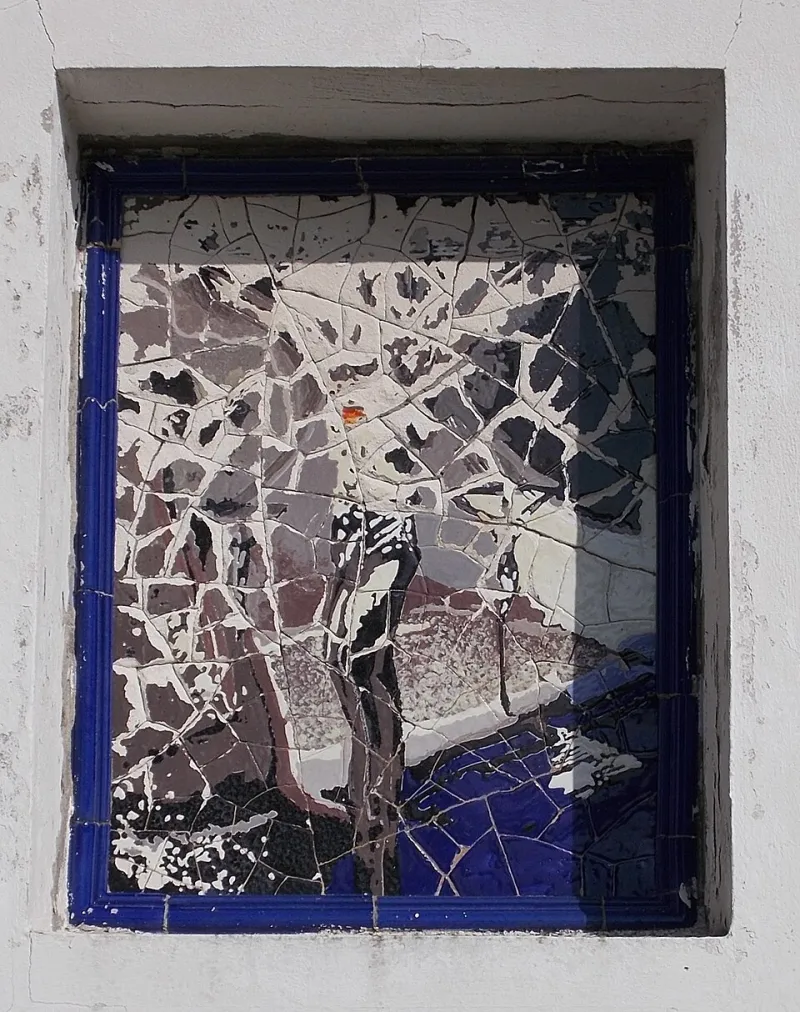
Photo: Globetrotter19, CC BY-SA 4.0, via Wikimedia Commons
The Grace of Fragments
A mosaic is not an apology for brokenness. It is a way of setting brokenness in place so that light can catch it. The maker does not pretend the tile was never cracked; the maker arranges the crack within a larger pattern. Scripture returns to this image often, not because stone is sentimental, but because stone is ordinary, heavy and real. In the grey afternoons of a British November, when many readers feel the weight of unfinished things, the Bible's stone-and-building passages offer a steady grammar of hope.
The seven readings below are not a complete theology of architecture. They are a mosaic in miniature: each passage contributes a colour, a texture and an edge. Read them slowly. Let each one sit beside the others. The point is not to deny the scar but to see how God habitually builds with pieces the world discards.
1. Living Stones in a Spiritual House (1 Peter 2:4-5)
Peter addresses a scattered people and calls them living stones, built into a spiritual house. The image is corporate before it is personal. No single stone is the house. The strength lies in being set alongside others, even those we did not choose.
Reflection: Many Christians in the UK carry a private sense of being spiritually unremarkable. Peter does not ask them to become impressive stones. He asks them to come to Christ, the living stone, and to allow themselves to be placed. Placement is humbling. It also makes a wall possible.
Tile prompt: Take one chipped tile, pebble or piece of broken crockery and place it on a windowsill. Pray for one person in your parish or congregation whom you find difficult to understand. Ask that both of you may be set well in the same house.
2. The Rejected Stone at the Corner (Psalm 118:22)
The psalm speaks of the stone the builders rejected becoming the cornerstone. It is a verse the New Testament returns to repeatedly, seeing its fulfilment in Christ. The rejected piece is not moved to a shameful corner; it becomes the piece that holds the angles together.
Reflection: Rejection has a long afterlife. A failed interview, a church split, a family silence or a season of ill health can make a person feel permanently surplus. The psalm does not say rejection never happened. It says rejection is not the final judgement on what a stone is for.
Tile prompt: Choose a small tile and write on its underside a word for an experience you have wanted to hide. Place it at the edge of a simple mosaic or arrangement, not at the centre. Let it be a reminder that Christ can bear the weight of what others set aside.
3. Rebuilding with Rubble (Nehemiah 4:1-6)
Nehemiah's workers face mockery as they rebuild Jerusalem's wall. The rubble is extensive, and the task is public. The wall rises not by denying the mess but by organising labour around it: each family, each gate, each section.
Reflection: Rebuilding is rarely dramatic. In UK churches and communities, it often looks like repairing a leaking hall roof, restarting a lunch club, or simply turning up to weed a churchyard. Mockery can be loud, but the quiet setting of one stone beside another is louder over time.
Tile prompt: Repair one small thing this week: a loose tile, a torn notice, a neglected corner of a room. As you do it, pray for a local church or community project that is rebuilding after difficulty.
4. A Household Built on the Foundation (Ephesians 2:19-22)
Paul tells Gentile believers they are no longer strangers but members of God's household, built on the foundation of the apostles and prophets, with Christ Jesus himself as the cornerstone. The building grows by being joined together.
Reflection: A mosaic is a discipline of joining. The gaps matter. If every tile insists on its own space, the image disappears. Ephesians places difference inside unity: strangers become household, and separate pieces become a dwelling place for the Spirit.
Tile prompt: Arrange five small tiles in a row. On each, write the name of a person or gift that has helped form your faith. Notice the gaps between them. Pray that your own life may become a place where others are joined rather than excluded.
5. Stones Prepared in Silence (1 Kings 6:7)
When Solomon's temple was built, the stones were prepared before they were brought to the site, so that no hammer or chisel was heard in the house while it was being built. The text is strange and wonderful: much of the work happened elsewhere.
Reflection: Mosaic-making is full of unseen preparation. Tiles are cut, sorted and rejected before the final setting. Much faithful Christian work is the same. Preparation is not wasted simply because no one is watching. The quiet cutting room belongs to the building.
Tile prompt: Set aside fifteen minutes for unseen work: intercession, reading, repairing, or preparing something for another person. Do not photograph it or announce it. Let it be a prepared stone.
6. Fair Colours from Affliction (Isaiah 54:11-12)
To an afflicted city, God promises foundations of sapphires, battlements of rubies and gates of crystal. The promise does not minimise the storm. It answers the storm with colour.
Reflection: The mosaic tradition knows that dark grout can make a colour sing. In the same way, the promises of God do not always remove the grey; they set colour within it. For UK readers facing short days and long bills, this is not escapism. It is the patient claim that affliction is not the only colour in the palette.
Tile prompt: Choose three colours that represent hope, grief and gratitude. Place them together in a small square. Keep the arrangement visible for a week as a prayer for a city or neighbourhood you love.
7. The Jewelled Foundations of the City (Revelation 21:18-21)
Revelation describes the holy city with foundations adorned with every kind of jewel. The list is extravagant and varied. No single stone carries the whole glory. The city is a cumulative splendour.
Reflection: Every mosaic is eschatological in miniature. It asks the viewer to trust that the scattered pieces will one day be seen from above, where the pattern is clear. The church in the UK is tempted to despair over smallness. Revelation does not measure the city by the size of any one stone. It measures it by the faithfulness of the one who builds.
Tile prompt: Make a simple digital collage of twelve squares, each a different colour or texture. Label it with a prayer for the wider church in these islands. Let it be a small rehearsal of the city whose foundations are not ours to lay.
Setting the Pieces
The seven passages do not promise that scars will disappear. They promise that scars can be set. The Christian life is not a showroom of unbroken tiles; it is a workshop where the rejected, the chipped and the ordinary are gathered into a dwelling. In a season of dark afternoons and unfinished walls, that is a quiet and durable hope.