The Ploughboy’s Bible: Tyndale, Plain Speech and the Mosaic of a Readable Gospel
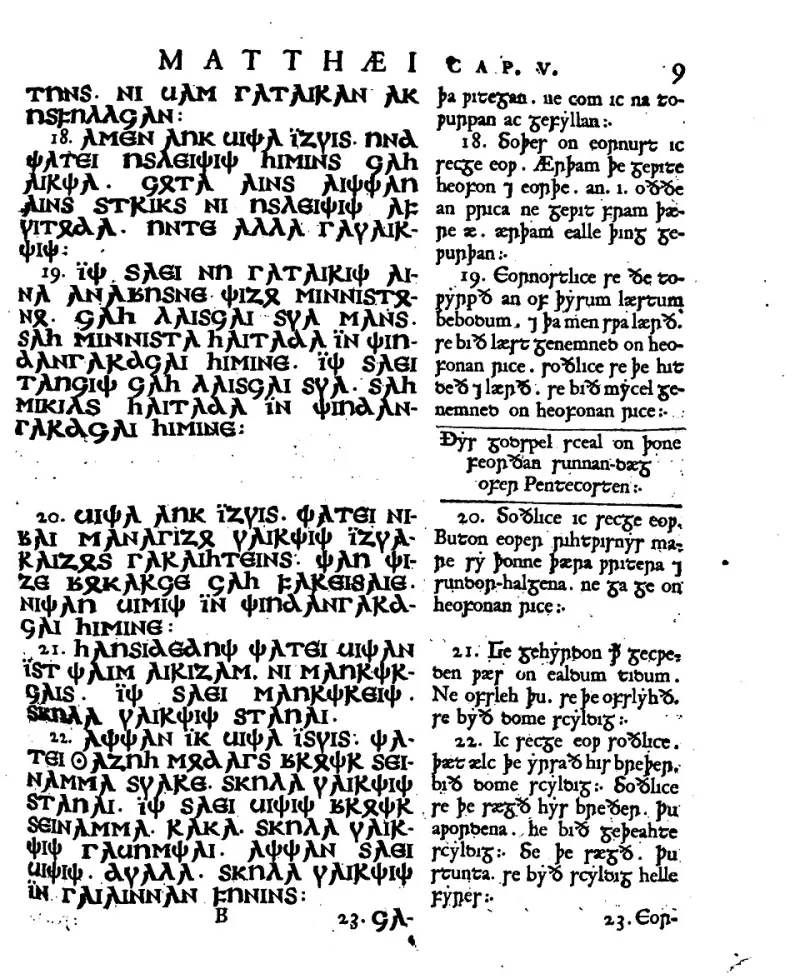
Photo: François Junius, Public domain, via Wikimedia Commons
In 2026, the Church in Britain marks five centuries since William Tyndale’s New Testament was printed in 1526. The anniversary is not merely an exercise in literary nostalgia. It is an invitation to look again at the kind of Scripture Tyndale laboured to place in ordinary hands: not a monument behind glass, but a working text, broken into sentences and sayings that could be carried into the kitchen, the field, the workshop and the parish church.
That is a mosaic instinct. A mosaic does not diminish an image by dividing it into tesserae. It makes the image available to the eye at close range. Tyndale’s plain English did something similar for the gospel. It did not make Scripture smaller; it made it present.
A Testament Made to Travel
Tyndale’s 1526 New Testament was the first printed English New Testament translated from the Greek. Printed on the Continent and smuggled into England in portions and in secret, it was a dangerous book precisely because it was a readable one. The point was not novelty. The point was access.
Tyndale is often remembered for wanting a boy at the plough to know more of Scripture than the learned might suppose. Whether or not every later account of that saying is exact, the aspiration is clear enough. The Bible was to be heard and understood in the language of prayer, work and common speech. The translation had to travel lightly enough to enter ordinary life.
There is a mosaic lesson here. The tesserae of a pavement or an apse are not admired only in the abstract. They are walked on, looked at, traced with the eye. Tyndale’s words were meant for similar use: read aloud in the home, memorised in short phrases, argued over in the alehouse and repeated at the bedside.
Plainness Is Not Shallowness
It is easy to mistake plain speech for thin speech. Tyndale’s English is plain, but it is not impoverished. It has room for judgement, mercy, repentance, promise and command. It can say difficult things without dressing them in obscurity. This matters for congregations today, when Scripture is sometimes assumed to be either a specialist’s puzzle or a collection of comforting fragments.
A mosaic holds together because each piece is set in relation to the others. The same is true of biblical reading. A single verse may shine, but it is not the whole picture. Tyndale’s work invites readers to move from the memorable phrase to the wider passage, from the passage to the gospel, and from the gospel to the worshipping community that receives it.
This is not a plea for archaism. Few congregations will read Tyndale’s spelling with ease, and no one needs to pretend that sixteenth-century English is the same as our own. The anniversary is better kept as a prompt to ask what plain faithfulness looks like now. Are our readings audible? Are our notices intelligible? Do our Bible studies help people move from a favourite line to the whole chapter? Do we assume that only the trained can speak about Scripture?
The Words That Stay
Tyndale’s influence lingers in phrases that many British Christians still know by heart, often without knowing their translator. Sentences heard at weddings, funerals, carol services and communion remain part of the common religious furniture of the country. This is a reminder that translation is not only an academic task. It is a form of communal memory.
Yet the anniversary should not become a celebration of Englishness for its own sake. The gospel is not the property of one language or nation. Tyndale’s achievement belongs within the wider work of making Scripture available across languages and cultures. In Britain, that work continues in parishes where English is a second or third language, in Welsh and Gaelic-speaking congregations, and in communities where literacy itself is a daily struggle.
A Congregational Mosaic for 2026
Congregations might mark the anniversary simply and locally. A Bible study could compare a short passage in a modern translation with a modernised Tyndale text, asking which words carry the weight and which need explaining. A service might include a reading from the Gospels preceded by a brief, factual note on Tyndale’s 1526 New Testament. A coffee morning could invite people to write a single phrase of Scripture on a small card, then arrange the cards into a larger panel for the church hall.
The exercise need not be elaborate. Its value lies in the pattern it creates: many small pieces, each legible, held together in a common frame. Children, older members and visitors can all contribute a tessera. The result is not a masterpiece, but it is a truthful image of a reading church.
Held Together in Plain Words
Five hundred years is a long time for words to survive. It is longer still for them to remain useful. Tyndale’s New Testament survived because it served the gospel, not because it was polished for a museum. It gave English-speaking Christians a vocabulary for repentance, faith, grace and hope that could be spoken by ordinary people in ordinary places.
As 2026 unfolds, the anniversary is best kept not with self-congratulation but with renewed attention. Read a passage aloud. Explain a difficult word. Share a verse with someone who would not come to a study group. Set the pieces where they can be seen together. The mosaic of English Scripture is not finished, and the next tessera may be placed by a congregation that has learned again the grace of plain words.