Currants, Collects and the Common Good: A Stir-Up Sunday Mosaic
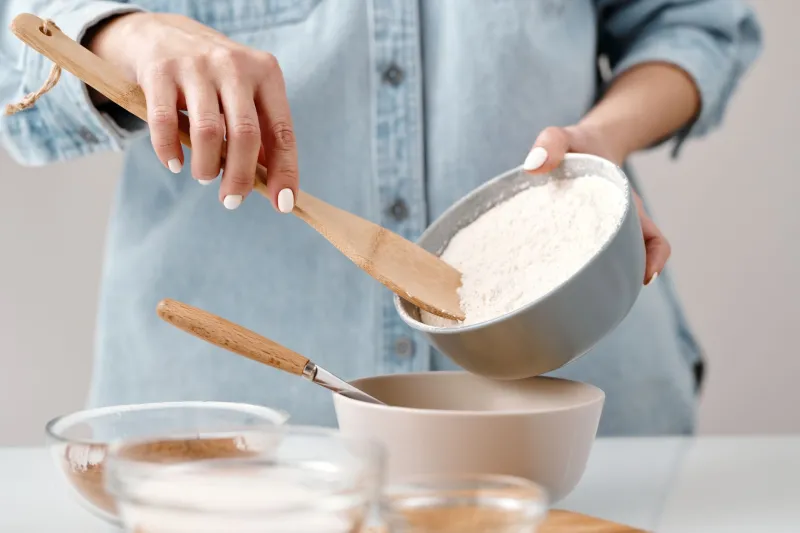
Stir-Up Sunday falls on 22 November 2026, the last Sunday before Advent. In many British homes, currants will be weighed, candied peel will be chopped, and a pudding basin will be passed from hand to hand. In many churches, the old collect will be read: 'Stir up, we beseech thee, O Lord, the wills of thy faithful people.' The coincidence is familiar, but it is not trivial. A pudding and a prayer can teach a congregation how a mosaic is made: many distinct pieces, set in a common bed, waiting together for the feast to come.
A Collect Kneaded into the Calendar
The prayer commonly associated with Stir-Up Sunday belongs to the Book of Common Prayer, appointed for the fourth Sunday before Advent. It asks God to stir the wills of the faithful, so that they may bring forth the fruit of good works. The original concern was not suet and spice. It was discipleship. Yet the language entered the kitchen, and households responded with spoons and apron strings. That happy accident is worth keeping, provided we do not confuse pudding with piety.
The theological suggestion is genuine. The collect asks God to stir; the kitchen asks us to stir. Grace and effort sit side by side. We do not manufacture our own goodness, but neither are we passive. We pray for wills that are moved, and then we move. In a mosaic, the artist places each tessera, but the setting bed holds it. The tile is active and held at the same time.
Every Ingredient a Tessera
A Christmas pudding is a mosaic before it becomes a pudding. Currants, raisins, sultanas, candied peel, suet, breadcrumbs, flour, spice and citrus zest each keep a distinct character. None is the whole. The peel is sharp, the suet plain, the spice assertive, the breadcrumbs humble. A good pudding does not grind them into uniformity. It binds them in a mixture where difference remains recognisable and yet becomes something new.
This is a useful corrective to the idea that Christian service is a solo masterpiece. A solo masterpiece needs only one hand. A mosaic needs many pieces and a patient setting. The same is true of a household, a congregation or a street. The Advent question is not who can make the finest single tile, but who will allow their tile to be set beside another.
The Verse in the Mixing Bowl
Hebrews 10:24 says, 'And let us consider how to stir up one another to love and good works.' The word 'consider' matters. It suggests deliberate attention rather than accidental irritation. The verse is not an invitation to provoke one another into argument; it is a call to provoke one another into love. Verse 25 adds the communal setting: not neglecting to meet together, but encouraging one another.
Stirring, in this sense, is an act of shared craftsmanship. The pudding is stirred by many hands. The church is stirred by many lives. A mosaic is not made by one tile admiring itself in isolation; it is made by tiles placed in relation. Hebrews gives the recipe a direction: love and good works. It does not give a single method. That is left to the local church, the local street and the local kitchen.
A Household Stirring Ritual
A simple ritual can help a household inhabit the day without turning it into a performance. Before the first stir, read Hebrews 10:24 aloud. Let each person name one person or situation that needs love and good works in the coming weeks. Then take turns stirring, not for luck but as an embodied prayer. Keep a small card nearby with the names written on it, and return to those names on Christmas Day.
A second option is to place a small bowl of dried fruit at the centre of the table. Each person adds a handful and names a hope for Advent. The mixture is later used in the pudding or simply kept as a visible reminder. The point is not ceremonial exactness. It is the ordinary discipline of connecting prayer to the work of our hands.
A Church Stir-Up List
A parish might also create a 'stir-up list' for Advent. Instead of asking for vague good intentions, invite each member to name one concrete act of love between Advent Sunday and Christmas: a visit to an isolated neighbour, a phone call to someone recently bereaved, a shift at the local food bank, a note of encouragement to a tired volunteer. Write each on a paper tessera and assemble them on a board in the porch or church hall.
The list should encourage, not compare. It is not a league table of holiness. It is a mosaic of small obediences. A congregation might pair the list with an Advent study on Hebrews 10, a quiet collection for a local charity, or a 'stir-up buddy' who checks in during the week. The aim is to make good works visible enough to be shared and humble enough to be prayed over.
The Pattern of Waiting
A Christmas pudding is not ready when it is mixed. It must be steamed, stored and matured. A mosaic is not complete when the tiles are laid. It must be grouted and allowed to set. Advent has the same pattern. We wait for the coming of Christ, and the waiting is not empty space. It is part of the design.
On 22 November 2026, then, the stirring need not be hurried. The collect asks God to stir wills; the pudding asks us to wait. Between those two movements lies the whole shape of discipleship: grace that moves us, work that occupies us, and hope that holds us. A shared mosaic is never finished in a single afternoon. It is made by many pieces, many hands and many small acts of love, set patiently in the bed of God's faithfulness.