When the Wall Became a Window: Coventry, Forgiveness and the Art of Holy Reassembly
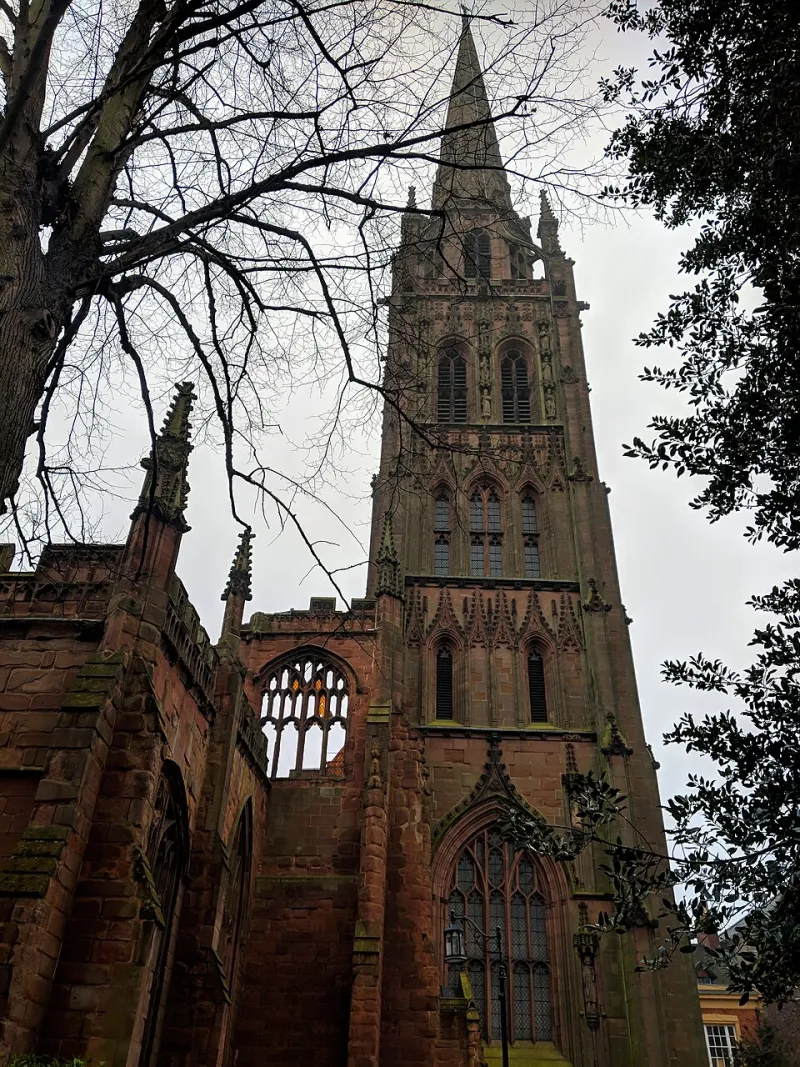
Photo: Enchufla Con Clave, CC BY-SA 4.0, via Wikimedia Commons
On the night of 14 November 1940, Coventry’s medieval cathedral was bombed and left in ruins. The old walls still stand beside the new cathedral that opened in 1962, and together they form one of the most eloquent Christian sites in Britain. Coventry did not choose to become a symbol of reconciliation. It became one because its people refused to let destruction write the final sentence. The ruined masonry and the modern glass are not a denial of grief; they are a way of holding grief and hope in the same frame.
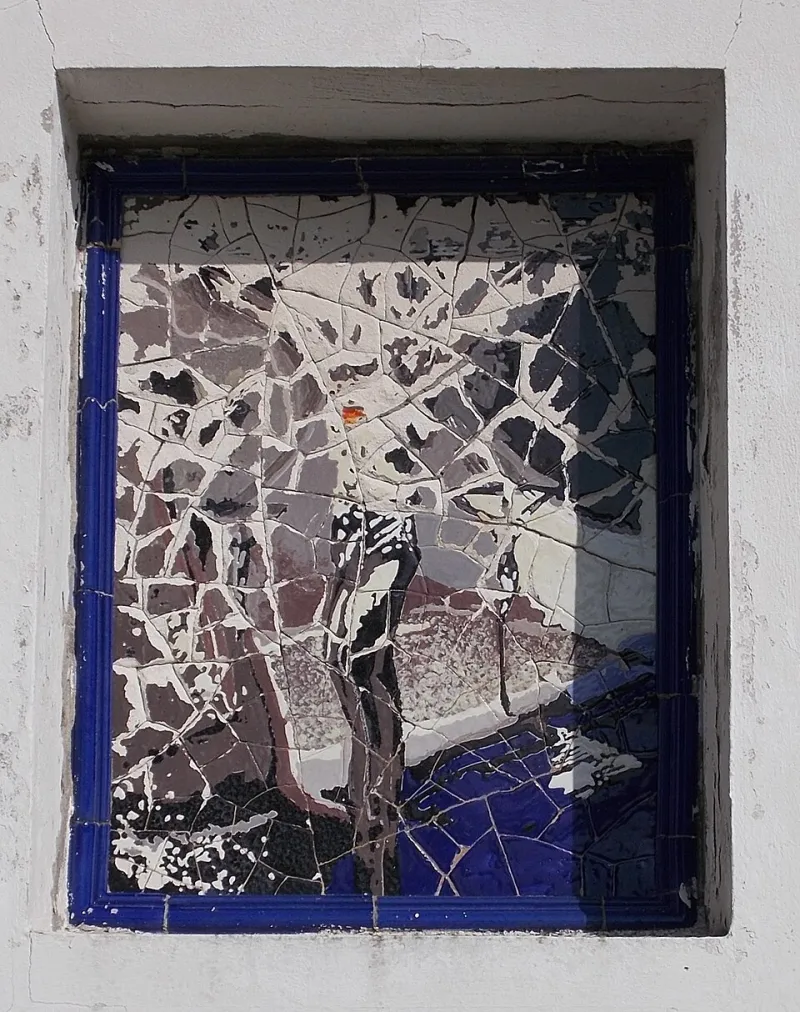
That is close to the work of mosaic. A mosaic does not pretend that broken pieces are whole. It places them where they can catch light. Holy Bible Mosaic exists to weave Scripture, reflection and visual art into that kind of patient seeing. This study therefore approaches reconciliation not as a slogan but as a craft: slow, particular, costly and possible. The seven passages below are stones for a Coventry-shaped mosaic, offered to UK readers who feel the fractures in their own streets, families, churches and public life in 2026.
1. Genesis 50:20 — The Fragment That Does Not Have the Final Word
Joseph’s words to his brothers are not a neat explanation of suffering. They are the testimony of a man who has stopped letting the past dictate the whole design. “You intended evil against me,” he says, “but God intended it for good.” Coventry’s ruins make the same point without softening the evil of bombing. Reconciliation begins when we refuse to grant the wound the authority of the last word.
Mosaic reflection: Name one remembered harm. Do not minimise it. Ask what good might still be placed beside it, not instead of it.
2. Matthew 5:9 — Peacemakers Are Not Peace-Fakers
Jesus blesses peacemakers, not those who merely keep the surface calm. In a divided nation, it is tempting to confuse politeness with reconciliation. Coventry’s witness is more demanding: it faces the damage and then asks what rebuilding requires. Peacemaking means truthful speech, patient listening and a willingness to absorb cost.
Mosaic reflection: Where have you settled for avoiding conflict rather than pursuing peace? Choose one conversation that needs truth spoken gently.
3. Matthew 18:21–22 — The Arithmetic of Mercy
Peter wants a number. Jesus gives him a way of life. Seventy-seven times is not a rule for keeping score; it is a picture of mercy that refuses to be exhausted. In a culture quick to sort people into allies and enemies, this passage is deeply unsettling. Forgiveness is not amnesia, but it is a decision not to make resentment the organising centre of the mosaic.
Mosaic reflection: Identify a relationship where you have been counting. Ask whether the next faithful step is a boundary, a conversation or a prayer of release.
4. Luke 23:34 — Forgiveness from the Cross
“Father, forgive them, for they do not know what they are doing.” These words are spoken in the middle of violence, not after it. They do not excuse the executioners. They reveal a love that remains open under pressure. Coventry’s charred cross, made from fallen timbers, belongs near this text: the cross is not a decoration of power but a sign of costly solidarity.
Mosaic reflection: Place a small cross or dark tile where you pray. Let it remind you that forgiveness is received before it is offered.
5. Romans 12:17–21 — Overcome Evil with Good
Paul does not tell the Roman Christians to pretend that evil is small. He tells them not to be conquered by it. The command to feed an enemy is not sentimental; it is a strategy of holy resistance. In UK public life, where division can be profitable and outrage travels quickly, this text calls the church to a different economy.
Mosaic reflection: Choose one practical good action that cannot be read as retaliation. Do it without announcing it.
6. 2 Corinthians 5:17–20 — Ambassadors of Reconciliation
Paul says that anyone in Christ is a new creation, and that God has given us the ministry of reconciliation. The two belong together. We are not asked to manufacture reconciliation from our own resources; we are asked to carry a message we have first received. Coventry’s Community of the Cross of Nails has long understood this as a shared vocation rather than a specialism for experts.
Mosaic reflection: Write down one place where you are an ambassador this week: a workplace, a family group, a church committee or a neighbourhood chat.
7. Ephesians 2:14–16 — The Dividing Wall Broken Down
Christ is our peace, and he has broken down the dividing wall of hostility. This is not a vague spiritual claim. In Ephesus it touched the sharpest social boundary of the day. In Britain in 2026, the walls may be economic, racial, political or generational. The gospel does not deny that walls exist; it announces that Christ creates a new humanity in their place.
Mosaic reflection: Identify one wall you regularly reinforce. What would it mean to stand on the other side of it this month?
A Coventry Invitation
Coventry Cathedral does not offer a tidy triumph. It offers a truthful arrangement: ruin, cross, rebuild, window. The mosaic of reconciliation is never finished in this life, and it is never made alone. In 2026, UK Christians are invited to bring the fragments they would rather hide — personal failures, political disappointments, community wounds — and to place them where Scripture can speak to them. The result will not be a flawless picture. It will be a witness: broken pieces, held together by grace, letting light through.