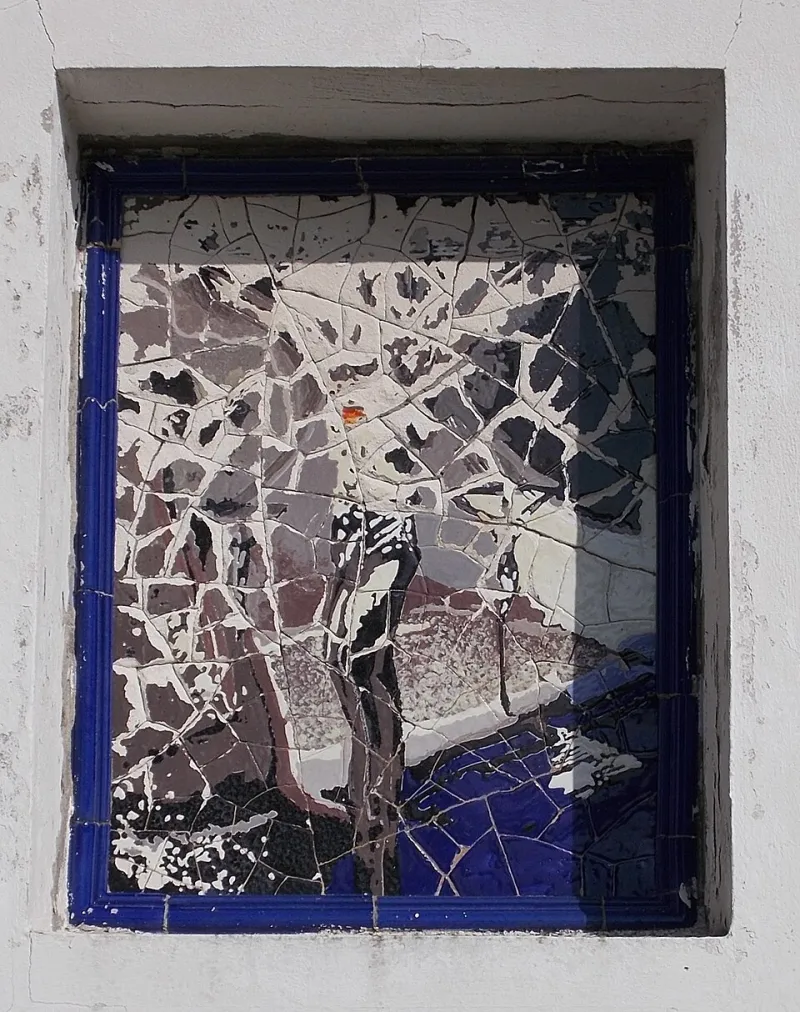
Ten Tiles for the Street You Know: A Local Love Map from Jeremiah to Luke
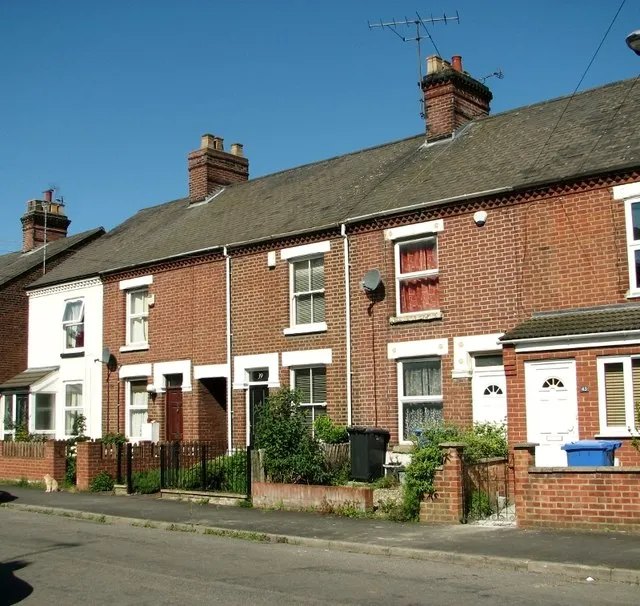
Photo: Evelyn Simak, CC BY-SA 2.0, via Wikimedia Commons
Most UK Christians do not live in an idealised parish from a devotional book. They live near a bus stop, a corner shop, a school gate, a food bank, a rented flat, a high street that has changed, or a street where neighbours nod but rarely speak. The local church is called to love that actual place, not a imaginary one. The Bible does not give us a template for a perfect community; it gives us tiles — small, specific texts that can be arranged into a faithful pattern.
This listicle is written for readers of Holy Bible Mosaic who want a practical local vision. Each of the ten scripture tiles below includes a short reflection and a mosaic-making prompt. The prompts are not crafts for their own sake. They are ways of slowing down long enough to see the neighbourhood as it is and to ask where love can be set in place. In 2026, with local services stretched and public conversation often fractious, the parish is a place for patient assembly.
1. Jeremiah 29:7 — Pray for the Peace of the Place You Did Not Choose
Jeremiah tells exiles to seek the welfare of Babylon, a city that is not their home. The command is startling: pray for the place where you are planted, because its peace is your peace. Many UK Christians feel temporary in their neighbourhoods — renting, commuting, waiting to move. This tile calls us to pray as residents, not visitors.
Tile prompt: Walk one street near your home and pray for each household you can see. Keep the walk short and repeatable.
2. Leviticus 19:18 — Love Your Neighbour as Yourself
The neighbour in Leviticus is not an abstraction. The verse sits among practical commands about wages, courts, the deaf and the blind. Love is measured in ordinary fairness. This tile asks whether our local love includes the people we find inconvenient, overlooked or hard to like.
Tile prompt: Write down the name of one neighbour you do not know well. Learn one fact about them this week.
3. Micah 6:8 — Do Justice, Love Mercy, Walk Humbly
Micah gathers the whole life of faith into three movements. Justice asks what is right for the vulnerable. Mercy asks what is kind for the guilty and the tired. Humility asks what is honest about ourselves. A local vision built only on friendliness will not last; this tile gives it a spine.
Tile prompt: Identify one local need that is about fairness, not just friendliness. Ask a church leader or community group how you can support it.
4. Proverbs 3:29 — Do Not Devise Evil Against Your Neighbour
This proverb is blunt. It warns against plotting harm against those who live securely nearby. Most of us are not scheming in the dramatic sense, but gossip, exclusion and petty resentment are still designs. The tile asks us to examine the small ways we make neighbourhood life harder.
Tile prompt: Notice one conversation where you are tempted to complain about a neighbour. Replace it with a prayer or a practical offer of help.
5. Matthew 22:36–40 — The Greatest Commandments
Jesus joins love of God and love of neighbour without collapsing one into the other. A local vision that is only social action becomes thin; a local vision that is only private devotion becomes blind. The two commandments form a single frame, and the neighbour is the test of whether our worship is real.
Tile prompt: Place a visible reminder — a stone, a card, a small drawing — where you pray. Let it represent one neighbour by name.
6. Luke 10:25–37 — Love That Crosses the Road
The Good Samaritan is the Bible’s great rebuke to religious busyness. The priest and the Levite do not hate the wounded man; they simply pass by. Jesus makes the outsider the hero and then says, “Go and do likewise.” Local love means noticing who is on our road and being willing to interrupt our plans.
Tile prompt: Identify one group in your area that is often passed by — older people, refugees, teenagers, night workers. Choose one small, appropriate way to cross the road.
7. Romans 12:13 — Contribute to the Needs of the Saints and Practise Hospitality
Paul links generosity with hospitality. The word hospitality is not about impressive dinner parties; it is about making room. In UK neighbourhoods, room can be a spare hour, a lift, a listening ear, a place at a table or a welcome in a church hall. This tile turns belief into a door left open.
Tile prompt: Look at your week and name one resource you actually have — time, space, transport, a skill. Offer it to one person or group.
8. Hebrews 13:2 — Do Not Neglect to Show Hospitality to Strangers
The letter to the Hebrews adds a striking motive: some who showed hospitality entertained angels without knowing it. The stranger is not a project; the stranger may be a messenger. This tile calls UK churches to welcome the new resident, the international student, the family newly arrived on the street.
Tile prompt: Find one local welcome event or community group and attend with no other purpose than to meet someone new.
9. 1 Peter 4:9 — Show Hospitality Without Grumbling
Peter knows that service can curdle into resentment. Hospitality without grumbling is honest hospitality: it does not keep a hidden ledger. Local love must be sustainable, which means it must be shared, bounded and rooted in grace rather than guilt.
Tile prompt: Review one regular act of service. Ask whether it needs to be shared, paused or reshaped so that it can be offered with joy.
10. Galatians 6:10 — Do Good to All, Especially the Household of Faith
Paul gives a wide horizon and a particular focus. Local love is not limited to fellow believers, but it begins with concrete responsibility. The church is meant to be a visible household of care within the wider neighbourhood, not a closed club.
Tile prompt: Name one way your church could work with — not merely for — another local group. Write down the first conversation needed.
Assembling the Local Vision
No single tile tells the whole story. Jeremiah keeps us praying; Leviticus keeps us fair; Micah keeps us humble; Luke keeps us crossing roads. A faithful local vision is assembled over years, through small decisions and ordinary presence. The parish you actually live in is not a problem to be solved but a mosaic to be made, piece by piece, under Scripture and in company with others.