A Crib of Odds and Ends: The Incarnation Preached by Cardboard and Clay
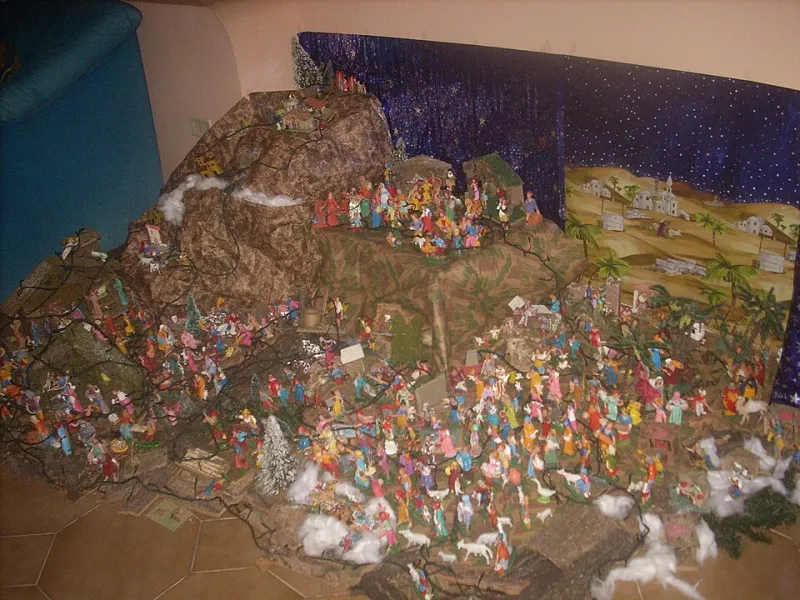
Photo: Jeanne Boleyn (talk), CC0, via Wikimedia Commons
Every December, in church halls and primary-school classrooms across the United Kingdom, a familiar scene is assembled. A stable made from a cereal packet, painted perhaps too enthusiastically. Figures modelled from clay or salt dough, some with faces that suggest more haste than artistry. A donkey whose legs have never quite agreed with one another. There may be a star cut from foil, a manger lined with shredded paper, and a sheep or two that have lost their footing since the previous year. The result is rarely elegant. It is often charming, occasionally chaotic, and theologically more articulate than it first appears.
The Crib as a Work of Tesserae
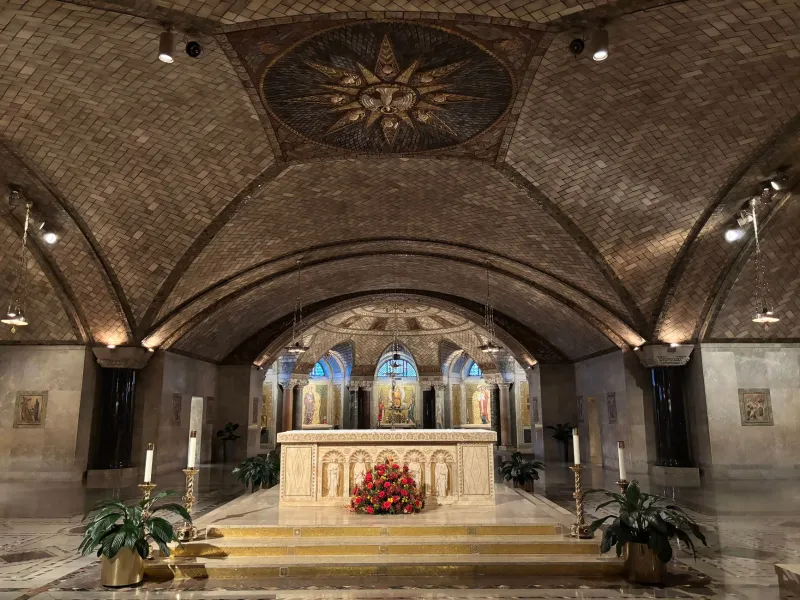
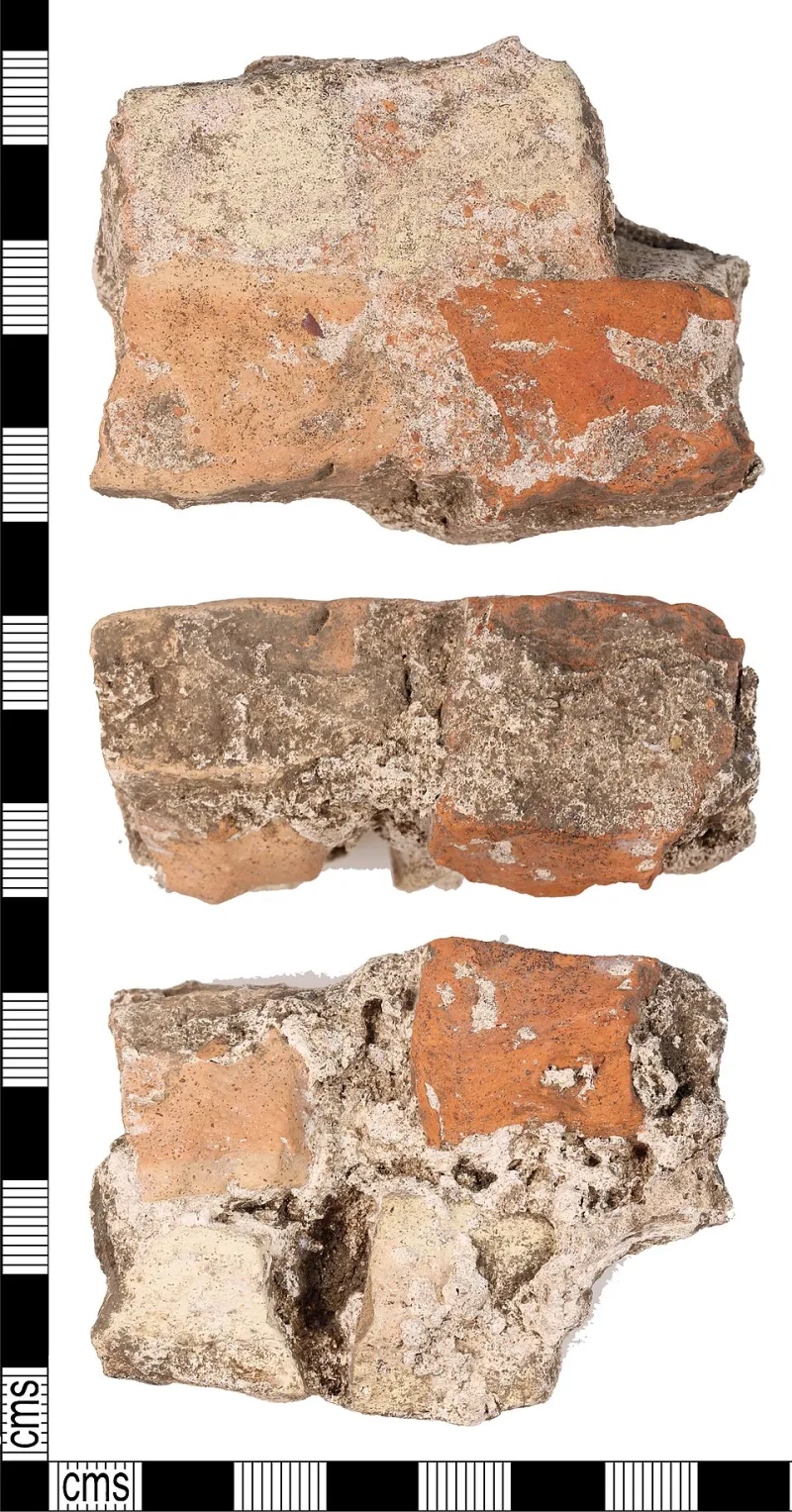
A mosaic is not made from identical pieces. Its beauty depends upon variation: fragments of glass, stone or ceramic, cut to different sizes and set at different angles. The maker works with what is available, arranging the uneven pieces into a coherent whole. The homemade nativity scene belongs to the same instinct. It is a mosaic of whatever is in the box — the leftover fabric, the old Christmas card, the modelling clay that has begun to dry at the edges.
This is not merely a matter of making do. It is a visual parable of the incarnation. The Word became flesh and made his dwelling among us, as John 1:14 puts it, and the flesh he took was not a polished display. It was ordinary, particular and vulnerable. The crib of odds and ends catches something of that truth. It does not pretend that the first Christmas was tidy. It simply places the figure of the child in the middle of the mess and trusts that the mess can become a witness.
What Luke Does Not Sanitise
Luke 2 is often remembered for its poetry: the angels, the shepherds, the manger. Yet the passage is strikingly unsentimental about the circumstances. A birth takes place away from home. A manger — an animal feeding trough — serves as a cradle. The first witnesses are not dignitaries but shepherds, who return to their flocks after telling what they have seen. The gospel does not smooth over the awkwardness of the scene.
The wonky donkey, then, may be closer to the text than the perfect porcelain set. It reminds the congregation that the incarnation happened in a real place, with real animals and real inconvenience. It also reminds us that the Church's proclamation has always been carried by ordinary people and ordinary materials. God did not wait for a flawless setting before entering the world. He came into a world of crooked timbers and unfinished business.
The School-Hall Crib and the Parish Conscience
In Britain, the school nativity play and the parish crib service are among the few occasions when the wider community still gathers around the Christmas story. Volunteers spend hours cutting, gluing and steadying figures that will be handled by children. The result is often photographed for the parish newsletter and then quietly repaired after the first week. This is not a distraction from the gospel. It is one of the ways the gospel is handed on.
The homemade crib also has a pastoral edge. It makes room for the child who cannot remember a line, the adult who is grieving, the family whose Christmas will be difficult. A display that is obviously imperfect is easier to approach than one that demands admiration. When the donkey leans, it gives permission for the congregation to lean too. The crib becomes a place where the unevenness of ordinary life can be brought into the presence of Christ without shame.
When the Donkey Leans
There is a danger, of course, in romanticising imperfection. A badly made crib is not automatically holy, and craftsmanship is not a sin. The point is not that shabbiness is virtuous. The point is that the crib, like the mosaic, points beyond itself. Its value lies not in its finish but in the One it announces.
This is the sacramental imagination at work: the conviction that God can use material things to convey grace. A piece of bread, a cup of wine, water, oil — and, yes, a cardboard stable and a lump of clay — can become carriers of a promise. The Church has always trusted that the visible can bear the invisible. The homemade crib is a small, domestic expression of that trust.
A Place for the Odd Piece
As Advent 2026 unfolds, many congregations will set out their cribs again. Some will be inherited, some will be newly made, and some will be assembled at the last minute from whatever can be found. It would be a mistake to see these displays as merely decorative. They are a form of proclamation, a mosaic of ordinary devotion.
The wonky donkey will not stand straight. The stable may sag. The star may refuse to stay attached. But in the midst of these odds and ends, the Church places the figure of the Christ child and says, in effect: this is the Word made flesh. He came into a world of uneven pieces, and he is not ashamed to be found among them. That is the gospel the crib preaches — not perfection, but presence.