The Porch Remembers: A Congregational Mosaic for Remembrance Sunday
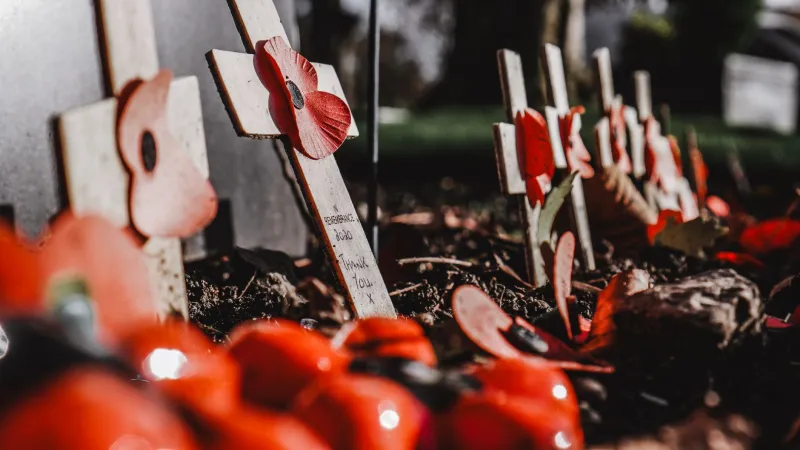
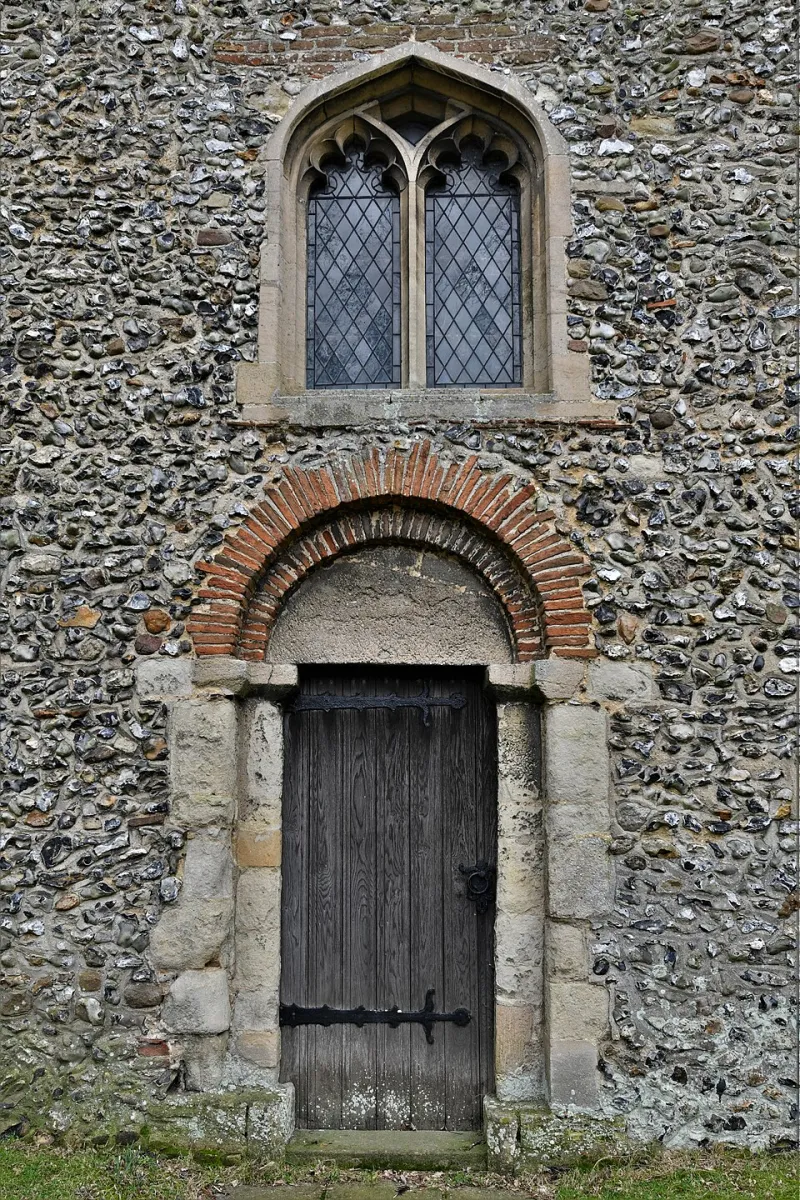
On Remembrance Sunday 2026, many British villages will gather at a memorial that stands where roads meet. The names are weathered, the wreaths are fresh, and the silence is carefully kept. A short walk away, the church porch waits. It is a threshold: a place of arrival and departure, of greetings and quiet exits. Set a mosaic there, and the porch becomes something more than a doorway. It becomes a place where a parish can hold fragments together.
From the Memorial to the Threshold
Civic remembrance has its own grammar: the Last Post, the lowering of standards, the two-minute silence at 11am, the wreath laid by a local dignitary or a child from the uniformed organisations. The parish church does not need to compete with that grammar. It can offer another room in the same house of grief.
The porch is a fitting room for it. Unlike the memorial, which often stands at a distance from daily worship, the porch is where the congregation passes week by week. A mosaic there is not a monument to completion. It is a discipline of holding fragments together: red petals, dark centres, green stems, and the grey or sandy lines of grout that keep them from falling apart.
Micah 4:3 gives the work its horizon. The prophet speaks of swords beaten into ploughshares and spears into pruning-hooks, of nations that shall not lift up sword against nation, neither learn war any more. That is not a decorative hope. It is a judgement on every arrangement that treats conflict as inevitable and peace as merely sentimental. Remembrance that stops at gratitude for the fallen has not yet heard the prophet's full sentence. The dead are honoured, but the living are also asked to learn a different way.
John 15:13 speaks into the same space: greater love hath no man than this, that a man lay down his life for his friends. The verse is often read at remembrance services, and rightly so. But it should not be used to baptise war as though every conflict were a straightforward act of friendship. It locates love in costly self-giving. That self-giving is seen in combatants who died, but also in medical staff, civil defenders, chaplains, neighbours, and the bereaved who carry on. The verse judges as much as it consoles.
What the Poppy Is Not
The poppy is not a talisman. It does not make a claim that a particular war was just, nor does it silence lament. In Britain, the Royal British Legion's poppy appeal has become a familiar part of autumn, and many parishes receive it without difficulty. But a parish does well to teach the difference between remembrance and nostalgia, between honouring the dead and hallowing the machinery that killed them.
A remembrance mosaic can help here because it is plainly made of pieces. It cannot pretend to be seamless. The red is bright, but the grout remains visible. The flower is recognisable, but it is also broken into many small parts. That is a truthful image of a community's memory: grateful, grieved, imperfect, and still being assembled under the hand of God.
A Practical Guide for a Parish Mosaic
A simple poppy mosaic can be made by a congregation of mixed ages and abilities in an afternoon or across two evenings. It need not be large. A panel of about 60cm by 90cm is enough for a porch wall or a portable board that can be brought out for the Act of Remembrance.
1. Gather the right people first. Speak with the incumbent, churchwardens, and, where the building is listed, take advice on faculty jurisdiction before fixing anything to the fabric. A portable panel is often the wisest first step. Invite a local Royal British Legion representative, a historian, and young people from the uniformed organisations. Their presence will shape the design and the conversation.
2. Keep the design disciplined. A single poppy, or three poppies of different sizes, is enough. Use weatherproof ceramic or glass tesserae in poppy red, black, and muted green. Plan a border of small stones or tiles in the colours of the church's own stonework. Avoid embedding personal names without consent; a book of remembrance or a border of initials may be more appropriate. Decide sensitively whether to include a white poppy for peace, and do not let the decision become a quarrel in the porch.
3. Make the workshop prayerful and safe. Pre-cut tiles where necessary, provide gloves and eye protection, and keep sharp tools for adults. Begin with a short reading of Micah 4:3 and John 15:13. Let people place a few pieces in silence. The work is slow enough to become a form of prayer.
4. Fix and grout with care. Use an exterior-grade adhesive suitable for the chosen base. Allow it to cure fully. Apply grout in a colour that does not shout: grey, sand, or charcoal. The grout lines are part of the design. Seal the panel if it will be exposed to weather.
5. Dedicate it without triumphalism. At the Act of Remembrance, bless the mosaic as a sign of remembrance and a prayer for peace. Place it where people can see it as they enter, not where it becomes a backdrop for military display. Let the dedication include silence, lament, and intercession for peacemakers.
The Grout Lines Are Not a Failure
A mosaic is often judged by its surface, but its strength lies in the spaces between the pieces. Grout is what keeps the fragments from shifting and falling. In a parish that has known loss, those lines can become a small parable. Grief is not a flaw in the pattern. It is one of the lines that holds the pattern together.
The poppies in the porch will fade in the sun and need occasional repair. That, too, is honest. Remembrance is not a single ceremony but a practice of repair: naming the dead, comforting the bereaved, praying for enemies as well as friends, and learning again the things that make for peace.
Keeping Remembrance Without Hallowing War
Many Church of England parishes use an Act of Remembrance within or alongside their Sunday worship, often drawing on Common Worship. In Scotland, Wales, and Northern Ireland, local patterns vary, but the pastoral instinct is similar: make room for grief, gratitude, and repentance. The two-minute silence is not empty. It is a space where a community refuses to fill the air with its own noise.
Parishes can mark the day without turning the nave into a recruiting poster. Pray for the dead of all nations. Pray for civilians who bear the heaviest costs of conflict. Pray for refugees, medical workers, chaplains, and those who rebuild. Sing a hymn that speaks of peace as well as sacrifice. Lay a wreath, and then ask what ploughshares might look like in the local economy of the parish: welcome for the stranger, care for the wounded, work for reconciliation in the street.
The mosaic at the church door will not settle the argument about war. It is not meant to. It is meant to make a small, visible claim: that the names on the wall are held before God, that the poppy can be a prayer rather than a slogan, and that the porch is a threshold where a parish learns again to walk in the way of peace.