Tesserae of the Reign: Seeing Christ in Majesty Before Advent
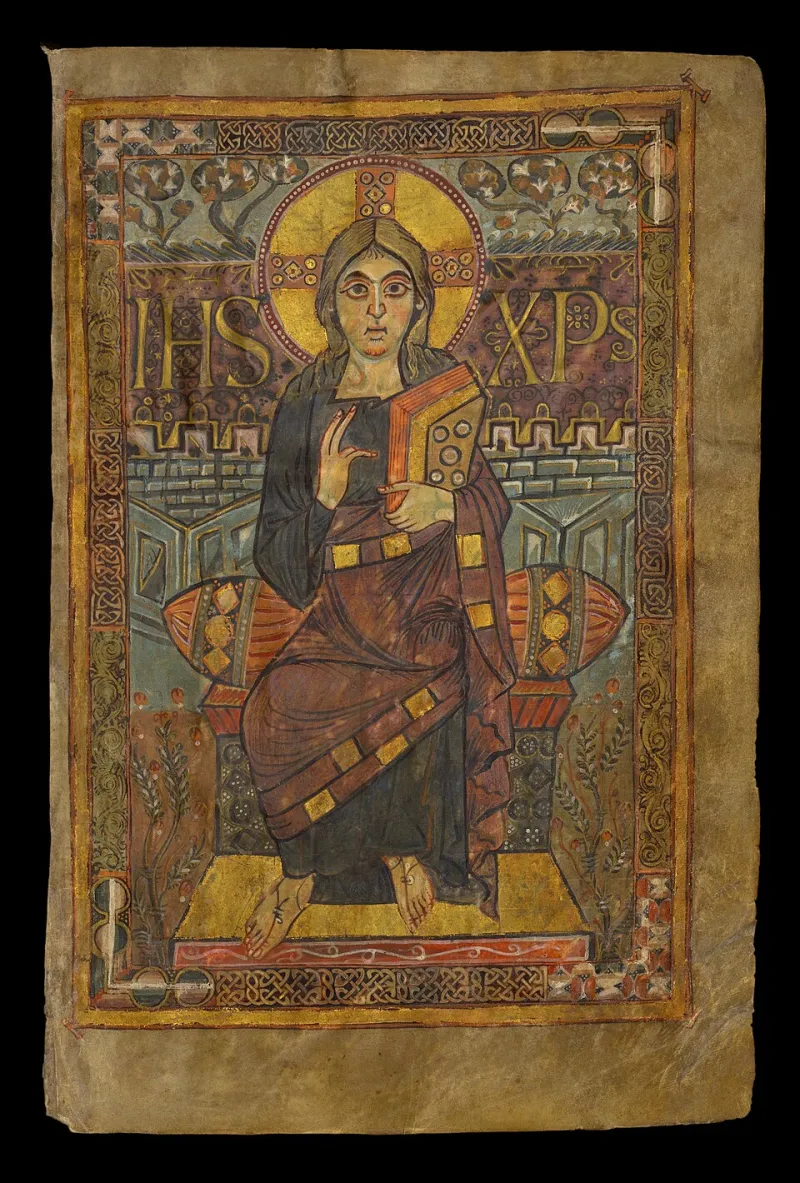
Photo: Godescalc, Public domain, via Wikimedia Commons
On 22 November 2026, the Feast of Christ the King gathers the Church at the close of the liturgical year. It is a feast that could easily be mistaken for a triumph, a final parade before the quieter disciplines of Advent. The mosaics of Christ in Majesty found in British churches suggest something more searching. They do not present a king who overwhelms the eye by force. They present a figure built from thousands of separate pieces, set in a fixed order, gleaming against a gold ground. The reign he announces is like that: ordinary lives, ordinary obediences, held together in a pattern that only faith can see.
A King Made of Many Pieces
In Westminster Cathedral, the apse mosaic gives the sanctuary a shimmering depth. In St Paul's Cathedral, the quire mosaics wrap the choir in a long, deliberate scheme of colour and figure. Visitors often speak of the gold, and rightly so. Gold in such mosaics is not merely a background. It refuses to let Christ be one object among many. It is light without a visible source, a visual reminder that the King we adore is not contained by the room.
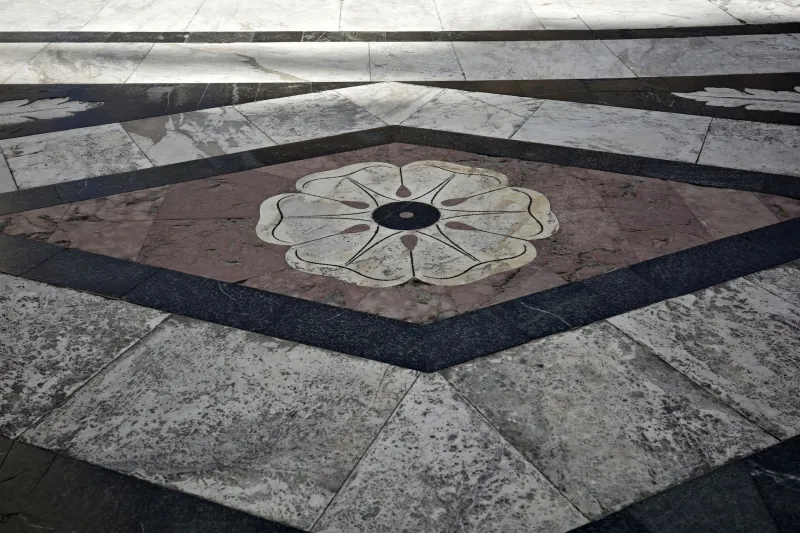
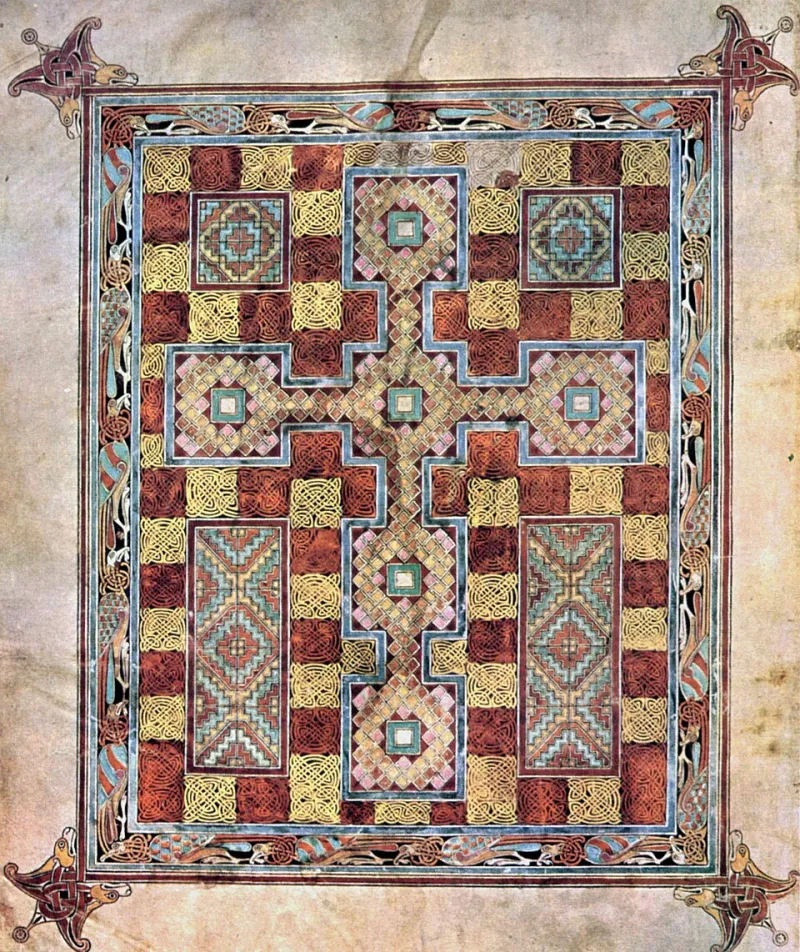
Yet the gold is made of small squares. Each tessera has its own tone, its own slight irregularity, its own place in the setting bed. No single piece is the face of Christ. The face appears because the pieces are ordered. This is a useful correction to the way we often imagine the kingdom of God. We look for a single grand gesture, a decisive intervention, a public settlement of all accounts. The mosaic suggests that Christ's reign is also assembled from the small, the repeated and the apparently insignificant: a prayer said in private, a debt forgiven, a truth told without cruelty, a Sunday kept when no one notices.
Colossians 1 speaks of Christ as the image of the invisible God, the firstborn of all creation, the one in whom all things hold together. The mosaic maker knows something of that holding together. Remove a few tesserae and the pattern weakens. Set them in the wrong order and the face is distorted. The reign of Christ is not a loose collection of good intentions. It has order, coherence and a centre. That centre is not our effort but his person.
The Readings of the Feast
Revelation 1:4b-8 opens with grace and peace from the one who is and was and is to come. It names Jesus as the faithful witness, the firstborn of the dead and the ruler of the kings of the earth. This is not a distant monarch honoured by title. He has made his people a kingdom and priests. The feast is therefore not merely about Christ's authority over the world; it is about the shape of a community that belongs to him. The reading ends with the promise that he is coming with the clouds. That promise is not an escape from the world but the arrival of the one who judges and renews it.
Colossians 1:11-20 prays for endurance, patience and joy, and then breaks into a hymn of the kingdom. We have been transferred into the kingdom of the Son he loves. In him all things in heaven and on earth were created, visible and invisible, thrones and dominions and rulers and powers. In him all things hold together. Through him God was pleased to reconcile all things, making peace by the blood of his cross. The reign of Christ is therefore not a reign of raw power. Its decisive act is the cross, where power is poured out rather than seized.
John 18:33-37 places us before Pilate. The question is blunt: are you the king of the Jews? Jesus does not deny kingship, but he redefines it. My kingdom is not from this world. If it were, his servants would fight. The kingdom is not absent from this world, but it does not take the world's methods. Jesus came to testify to the truth, and everyone who belongs to the truth listens to his voice. Pilate stands before the King and cannot see him. The feast invites us to take the opposite place: to listen, to look, and to recognise a reign that is present in truth, service and witness.
Gold Ground and Open Hands
A Christ in Majesty is usually shown with hand raised in blessing and a book or scroll in the other. The gesture is not a threat. It is an opening. The gold ground behind him makes the figure available to the whole church, not merely to the learned or the powerful. The mosaic says: here is the King who holds all things together, and here are his hands, open towards you.
That is why this feast is a surprisingly practical rehearsal for Advent. Advent is a season of waiting, but not of empty waiting. It is a waiting that has been given an order, a pattern, a set of readings and a King. The mosaic is made slowly, piece by piece. Advent is also made slowly. We do not manufacture the kingdom by our anxiety. We take our place within it, one tessera at a time: one act of patience, one honest word, one prayer offered when the day is already full.
The liturgical year ends on 22 November 2026, and the new year begins on 29 November. Between those dates there is a week that can easily be lost to ordinary business. The feast gives it a purpose. It asks us to look at the King before we look at the calendar.
A Devotional Exercise Before 29 November
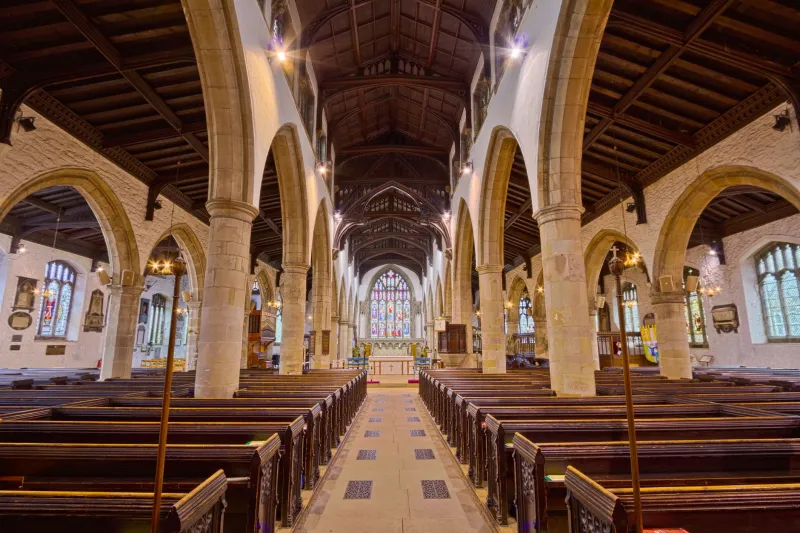
Before Advent begins, find half an hour in your own church. If your church has a mosaic, a stained-glass window, an icon or even a cross that has become familiar, sit before it. Read Revelation 1:4b-8, Colossians 1:11-20 and John 18:33-37 slowly. Do not rush to comment. Let the words and the image occupy the same space.
Then take a piece of paper and write seven ordinary pieces of your week. They need not be dramatic: a conversation repaired, a wait endured, a truth spoken gently, a hand given, a boundary kept, a meal shared, a forgiveness received. Place them under the heading Christus Rex. This is not a test of achievement. It is a way of seeing the order of the kingdom in the material of daily life.
Finally, sit with your hands open. Say quietly: Alpha and Omega, the beginning and the end. Ask where your hand is closed, and offer that closed place to the King whose hands are open. End in silence. When 29 November comes, carry the list into Advent. The King in Majesty is not a figure of gold and distance. He is the one in whom our small pieces are held together, and the one for whom we wait with open hands.