The Stone That Waits: Nehemiah, the Scaffolded Church and the Work of Holy Patience
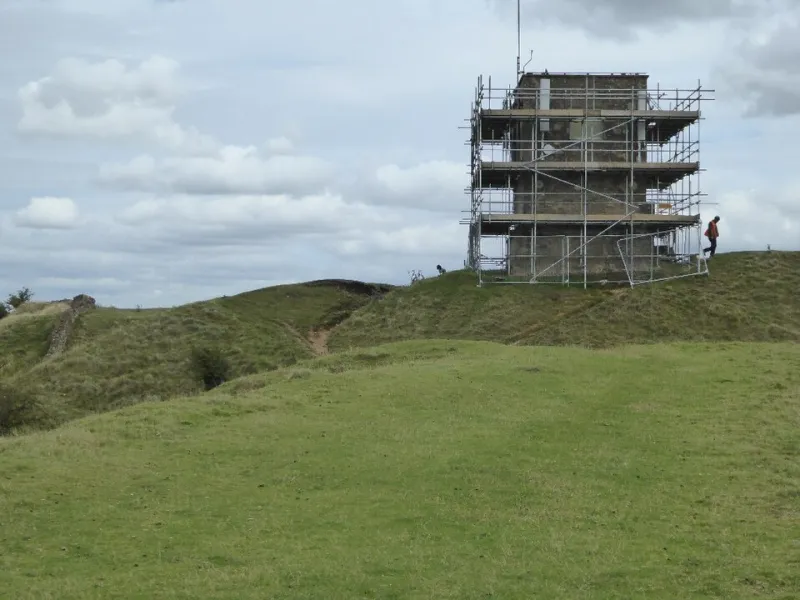
Photo: Philip Halling , CC BY-SA 2.0, via Wikimedia Commons
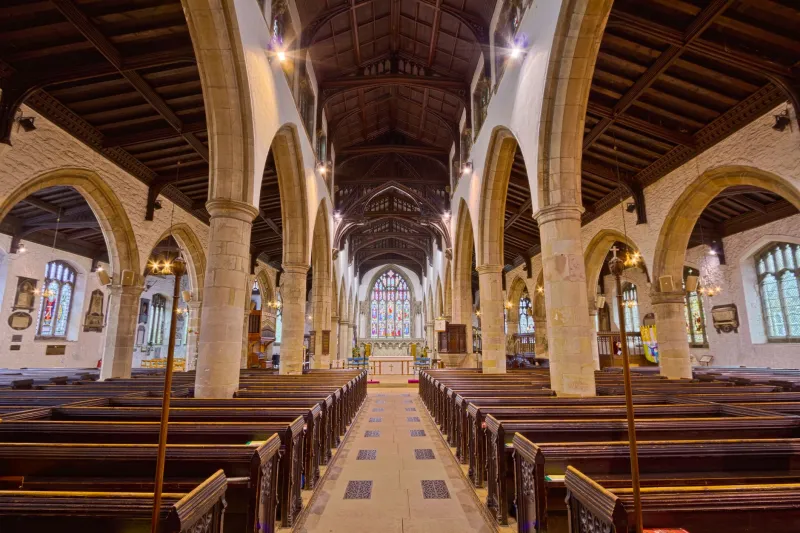
On a wet November morning, the scaffold around a village church can look less like a promise than a cage. The lead flashing has failed, the stone mullion is weathered, and the vestry has the unmistakable smell of damp plaster. The quinquennial inspection has done its work, the fabric officer has done hers, and the PCC now holds a document that reads like a bill of indictment against the last hundred years of English weather. It is easy, in such a moment, to admire Nehemiah from a safe distance and to forget that his famous wall began as a heap of rubble.
The Night Inspection
Nehemiah does not begin with a rallying speech. He begins with a night ride. He goes out by the Valley Gate, inspects the broken walls and burned gates, and says afterwards, 'I had not told anyone what my God had put into my heart to do for Jerusalem' (Nehemiah 2:12). There is a quietness to that inspection that congregations under scaffolding would do well to imitate. Before the faculty petition, before the grant application, before the archdeacon's visit, there is a work of honest looking. A church does not become holy by pretending the roof is sound. It becomes holy by bringing the truth of the roof into the light of God.
Nehemiah's night ride is not despair. It is diagnosis. He sees the rubble, names it, and then waits for the right moment to speak. For a PCC facing a six-figure repair bill, that pattern is a small liberation. The first task is not to solve everything in one meeting. The first task is to see clearly, to pray honestly, and to resist the twin temptations of panic and pretence.
Rubble Is Not Refuse
When the opposition begins to mock, Sanballat asks, 'What are these feeble Jews doing? Will they restore it for themselves?' (Nehemiah 4:2). Later the workers themselves cry out, 'The strength of the burden bearers is failing, and there is so much rubble that we cannot rebuild the wall' (Nehemiah 4:10). The rubble is real. It is heavy, dusty and discouraging. But Nehemiah's builders do not treat it as mere refuse. They sort it, move it, reuse what can be reused, and lay new stones alongside old ones.
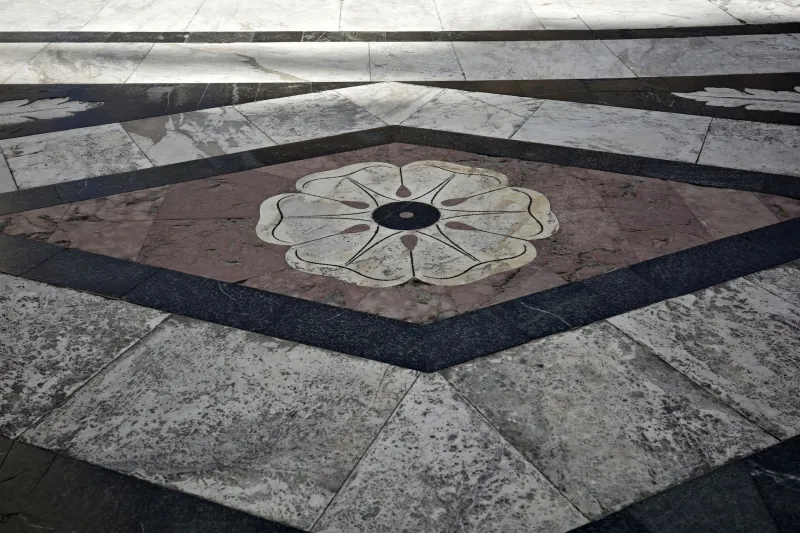
A mosaicist works in the same way. She does not begin with a finished picture and then break it. She begins with fragments and learns their edges. Some tesserae are chipped; some are irregular; some are scavenged from an earlier floor. The art lies in setting them into a bed that can hold them together. Church repair is not so different. The broken slate, the sound stone, the Victorian pew, the medieval font, the modern heating pipe: each piece has to be judged, sorted and set. The holiness of the work is not in pretending that nothing has cracked. It is in the patient refusal to throw away what can still serve.
The Long List of Ordinary Hands
Nehemiah 3 is easy to skim and easy to misunderstand. It is a long list of names, families and trades: the high priest and his brothers, the goldsmiths, the perfumers, the rulers of districts, the daughters of Shallum. Some repair the section outside their own house. Some work on the gates. Some do more than their share. A few, we are told, 'did not put their shoulders to the work' (Nehemiah 3:5). The list is ordinary, uneven and human, and that is precisely why it belongs in Scripture.
Most church repairs are carried out by ordinary hands. The treasurer who reads the insurance schedule, the volunteer who clears the gutters, the retired builder who knows a good stonemason, the flower arranger who moves the hydrangeas away from the damp patch, the child who asks why the ceiling has a bucket under it. This is not a fundraising manual, and it is not a clever stewardship campaign. It is a theology of shared labour. The wall is not built by one hero. It is built by many people, each responsible for a stretch, each learning that the work is larger than their own section.
Trowel and Watchfulness
Nehemiah's workers build with one hand and hold a weapon with the other (Nehemiah 4:17). The image is dramatic, but its underlying wisdom is ordinary: faithful work requires both construction and vigilance. In a UK parish, vigilance may mean checking the scaffold licence, asking the insurer the right questions, listening to the architect, and refusing to let a listed building be damaged by haste. It may mean watching for fatigue among volunteers and protecting the vulnerable from unsafe access. It may mean praying while the faculty process grinds on.
Watchfulness is not suspicion. It is a form of love. The same Nehemiah who posts guards also encourages the people: 'Do not be afraid. Remember the Lord, who is great and awesome' (Nehemiah 4:14). A congregation under repair needs both the trowel and the watch. It needs practical diligence and holy courage, and it needs to remember that the Lord is not absent from the committee room or the scaffold yard.
Glory Comes Later
The wall is finished in fifty-two days (Nehemiah 6:15), but the brevity of that verse should not be mistaken for a promise of quick fixes. Nehemiah's project had years of prayer, a royal petition, a night inspection, a workforce, opposition, and a long list of small assignments behind it. The glory comes later. The rubble comes first.
That is a hard word for congregations who want the scaffolding gone by Easter. But it is a hopeful word too. A church building under repair is a visible parable of sanctification: slowly, imperfectly, with many hands and much dust, God is setting broken pieces into a pattern that will one day be complete. The stone that waits is not abandoned. It is being prepared.
Lord Christ, who built nothing in stone that did not point beyond itself: give patience to those who care for older church buildings, wisdom to those who inspect and repair them, and humility to us all. Teach us to sort the rubble without despair, to share the labour without pride, and to wait for your glory in your time. Amen.