Martinmas for the Rest of Us: St Martin's Beggar and the Generosity That Fits Our Hands
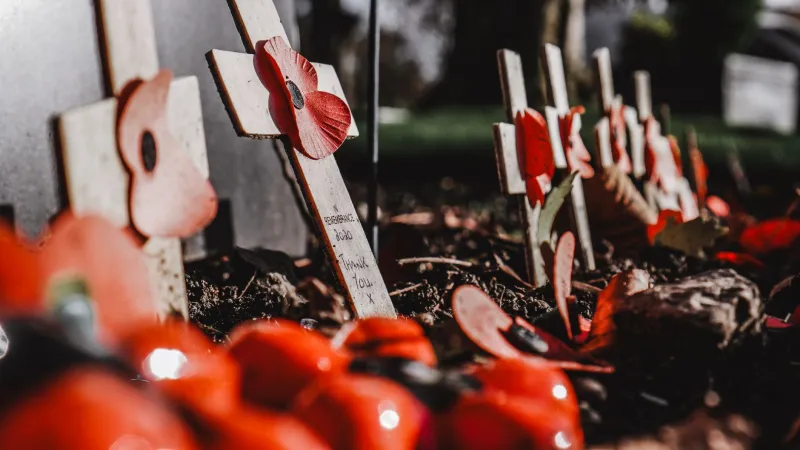
On the eleventh of November, this country keeps two calendars at once. One is civic and solemn: the poppy, the two minutes, the wreaths laid at the memorial. The other is older and quieter, and it belongs to a soldier who was never asked to fight. In the churches, Martinmas still arrives on the same date — the feast of Martin of Tours, the Roman cavalryman who divided his cloak at a city gate and, according to the Church's oldest memory of him, discovered afterwards that he had clothed Christ.
It is a strange day to hold two kinds of remembering, and yet not an unfitting one. Both ask the same question of us: what are we prepared to give away, and to whom?
The Man at the Gate of Amiens
Martin was born in Pannonia, in the middle of the fourth century, the son of a veteran. He was conscripted into the army as a young man, and it was while stationed in Gaul, on a bitter winter day, that the episode at Amiens took place. A beggar sat at the gate, half-naked, ignored by the passing crowd. Martin had nothing to give but the heavy military cloak on his back. He drew his sword and cut it in two, gave one half to the man, and kept the other for himself.
The earliest account comes from Sulpicius Severus, writing within a generation of Martin's death, and it is he who records the dream. That night Martin saw Christ standing among the angels, wrapped in the half-cloak he had given away, and heard him say to the heavenly host that a catechumen — a candidate for baptism, not yet confirmed in the faith — had clothed him with this garment.
Two details in the story are easily missed and worth keeping. The first is that Martin was not yet baptised; the mercy came before the credential. The second is that he gave half. He did not strip himself bare. He gave what he could spare without ceasing to be useful to others, and the hagiographer does not appear to consider this a compromise.
Two Halves and the Logic of the Mosaic
There is a mosaic principle hidden in the severed cloak, and it is the sort of thing this site keeps returning to. A mosaic is not made by breaking a whole and lamenting the loss. It is made by laying down fragments side by side until the fragments together say something the intact surface never could. The cloak at Amiens was, in a sense, cut into two tesserae — and the picture they set is mercy.
So it is with our giving. The garment of a whole life, kept intact and admired from a distance, clothes no one. Divided — a portion of time, a portion of money, a portion of attention — it enters the lives of others and begins to speak. What looks like damage to the cloak is the beginning of the composition.
The Gospel Behind the Legend
The dream is not a decorative flourish. It is the doctrine. When Christ says that the garment belongs to him, he is only repeating, in a new key, the words of Matthew 25: "I was naked and ye clothed me... Inasmuch as ye have done it unto one of the least of these my brethren, ye have done it unto me."
The parable of the sheep and the goats is often preached as a warning, and there is a warning in it. But its deeper gift is a promise of concealment: the needy person in front of us is rarely obviously Christ. He or she is simply cold, or hungry, or inconvenient, or standing at a gate that we are anxious to pass. The parable teaches us to act before recognition arrives. Martin gave, and saw afterwards. That order matters.
There is also, in the half-cloak, a word of release for those who feel the weight of a world's need too heavily. Paul writes to the Corinthians that a gift is accepted according to what a man has, not according to what he has not. The standard is not the whole wardrobe. It is the willing half.
A Saint the British Have Never Quite Left
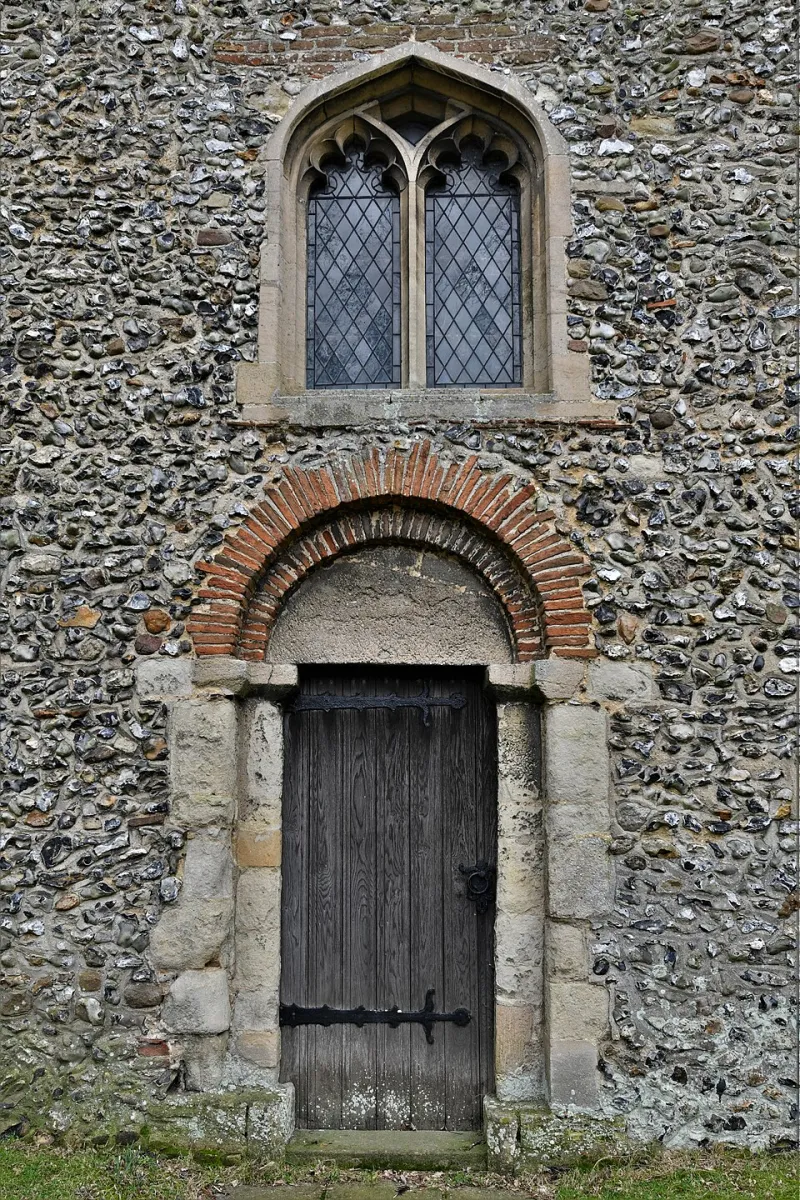
Martin's name is woven through this country's landscape more deeply than most English Christians realise. At Canterbury, the small church of St Martin's, standing among its churchyard before Augustine ever landed, is generally reckoned the oldest church in England still in use — and it was the Frankish queen Bertha, a princess from the continent where Martin was venerated, who kept her devotions there. Augustine's mission began, in effect, beside Martin's altar.
At the other end of the scale stands St Martin-in-the-Fields, at the corner of Trafalgar Square, whose name and ministry have long been associated with the care of those sleeping rough in central London. Elsewhere, from rural parishes to Victorian town churches, dedications to St Martin remain remarkably common, and many will keep the feast this week with a simple communion and perhaps a shared meal.
Martinmas has left its mark on English and Scottish custom too. It was one of the old quarter days — a time when farm servants were hired and moved on, when the winter's meat was salted, and when, in some places, bonfires marked the turning of the year. The saint who shared a coat became, in folk memory, the patron of a season of sharing.
A Martinmas Exercise for the Week Ahead
Something practical, in the spirit of the half-cloak rather than the whole wardrobe. Set aside an evening this week to make a short list of five pieces of your own life that could be divided without ruining the garment:
- A winter coat or blanket in good condition, given to a charity shop or a local shelter rather than kept for the year it will never be worn.
- Two hours, offered to a neighbour who is newly alone or newly ill — and offered as a fixed appointment, not a vague intention.
- A standing order, however small, to a food bank or a night shelter in your own town, so that the giving does not depend on your memory in February.
- One name, written down, of somebody in your congregation whom you have been meaning to visit.
- A prayer, said once, for a person you would ordinarily prefer not to see at the church door.
None of these is heroic. That is precisely the point. The legend's power lies not in an impossible extravagance but in a divided cloak and an ordinary man who acted before he had thought of the cost.
Prayer of the Divided Cloak
Lord Christ, who stood at the gate of Amiens in the cold of another man's body: teach us to give the half we can spare, and to give it swiftly; to see you in the faces we would rather hurry past; and to trust that what we divide for mercy is not lost, but set into your mosaic, piece by piece, until the picture is complete. Amen.